Showing posts with label perspective. Show all posts

Thursday, July 27, 2017

In the desert working on LSST

This may seem like old news to some of you now, but earlier this year I moved across the world, back to the USA to the sonoran desert of Tucson, Arizona to start the next phase of my career: Head of Education and Public Outreach (EPO) for the Large Synoptic Survey Telescope (LSST).  

If you haven't heard of this amazing new telescope being built in Chile right now, here's an intro video I'm proud to have produced:


To find out more about the EPO program itself, you can watch the video below or see slides from a recent talk I gave.


Ida Luna and I are surviving our first desert summer and monsoon season - it's beautiful and dramatic and I can't wait to see what happens next!

new home :)

huge blooming cactus

blue skies

powerful sunsets
 

Tuesday, April 19, 2016

Introducing Ida Luna

While this blog has been quiet over the last few months, my home certainly hasn't been, thanks to welcoming to the world my little girl: Ida Luna! 

She was born in February 2016, and started with a healthy amount of skepticism :)  here she is with her grandma on day 2: 

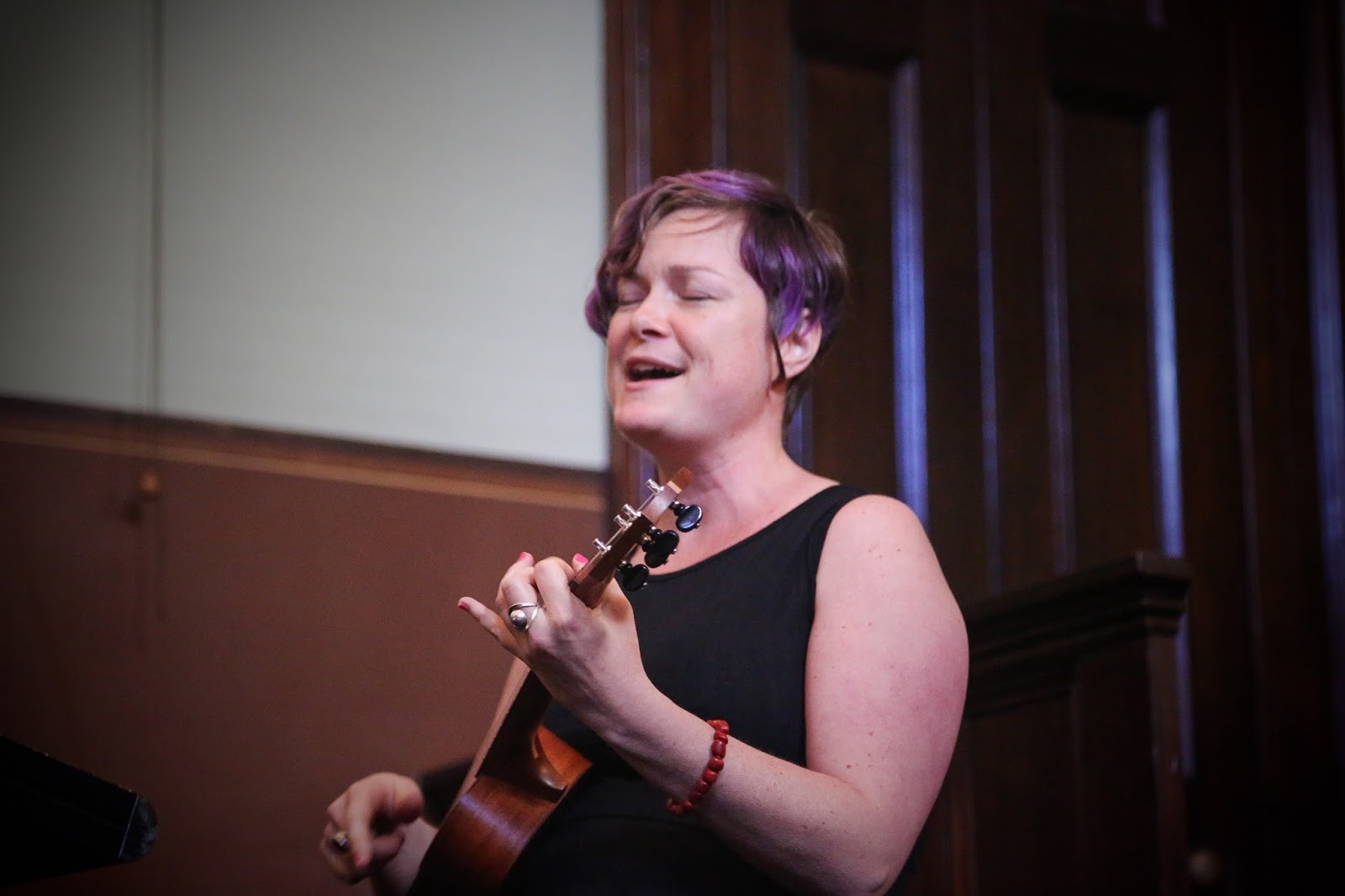
I'm not sure about this world, grandma, but i sure like your singing!
and a few weeks later, she's still got it!


she's a content little baby and we're enjoying this new life together.


this is our major mode of transportation.  both of us LOVE the Yoli & Otis carrier! 


her expressions are endlessly cute and varied!


to be honest, i'm really enjoying time off work.  i'm doing some fun side projects (stay tuned!) that are keeping my mind entertained, but overall, it's a nice break from the pressures of academia and media. 

Mama and Ida Luna at 7 weeks

Monday, January 25, 2016

Five things we know about the universe that will make you feel very small

Here is an article I contributed to ABC Science, originally posted here.


Five things we know about the universe that will make you feel very small.

One thing we know about the universe is that it's really big. Another is that thinking about it and trying to understand it will make your brain hurt.

Astronomer Amanda Bauer takes us through her top five mind-expanding things we know (or don't know) about the universe.

1. There is no edge of the universe
PHOTO: Full-sky map of the oldest light in the universe (NASA/WMAP Science Team)
There is one edge we know of - our horizon, which is the limit of how far we can see.

Imagine sailing on a boat on the ocean and seeing a horizon in the distance, past which you know there is more Earth, but you just can't see it. We've measured the universe to be flat (as opposed to curved like Earth or saddle-shaped), but our horizon exists because of the finite speed of light.

Beyond that visible horizon, we think the universe just keeps going in the same way - forever.

We have no reason to believe there is an edge. But we also have no way of measuring this infinity because we physically cannot see it.


2. Dark matter and dark energy make up 95 per cent of the universe

PHOTO: A composite image showing the galaxy cluster 1E 0657-56, better known as the bullet cluster. Gravitational lensing was used to locate the dark matter (shown as blue patches) in these two colliding galaxies. The pink colour shows gas blown apart by the collision. (NASA/Chandra X-Ray Observatory)

Only 5 per cent of the universe is made of ordinary material like planets, stars, cars, and coffee. This "normal matter" is made mostly of protons, neutrons, and electrons.

Another 24 per cent is an exotic material that interacts through gravity, but produces no light, making it invisible to us. We call this "dark matter".

While dark matter only interacts with normal matter very weakly, particle physicists have plausible candidates for what dark matter is.

Hopefully particle accelerators like the Large Hadron Collider will provide more insight for scientists very soon.

That brings us to the final 71 per cent of the stuff in the universe, which is a truly bizarre type of matter. Perhaps it's not matter at all, but a property of the universe itself. We call this mysterious stuff "dark energy".

What we do know is that dark energy has a gravitationally repulsive effect that is causing the expansion of the universe to speed up. But we don't understand how this acceleration is happening.


3. There is no centre of the universe

PHOTO: In a way, we're all at the centre of our own universe. (NASA/Ames/JPL-Caltech)
The universe has been expanding ever since the Big Bang 13.8 billion years ago.

But the Big Bang should not be imagined as a normal explosion in space. Rather, the Big Bang is an explosion of space itself, so that every point in space expands equally away from every other point in space. There is no centre to the expansion.

From our galaxy we measure that all galaxies are moving away from us, and the farther the galaxy, the faster away it is moving.

The interesting thing is that if you zoomed off to any other galaxy in the universe, you would measure the exact same effect - all other galaxies would be moving away from you.

In this way, you could argue that you are the centre of the universe. But then, so is everyone else.


4. Far-away galaxies offer a glimpse into the past

PHOTO: At 3 million light years from Earth, the Triangulum galaxy is even further away than Andromeda, so gives us a glimpse even further back in time. (NASA)
When we look at distant galaxies, we are actually looking at a snapshot of the past.

Some galaxies are located so far away their light takes billions of years to reach us, even travelling at the speed of light. The images we collect through our telescopes tell us what the galaxies looked like billions of years ago, when the light left the galaxy.

Andromeda is the nearest spiral galaxy to our Milky Way. It floats at a distance of 2.5 million light-years, so the views we capture of Andromeda show us what it looked liked 2.5 million years ago. And that's the closest spiral galaxy.

The farthest galaxy we have detected is 13 billion light years away. This means we are looking at galaxy light as it was only 2 billion years after the Big Bang.

We will never capture light from the future though, only the distant past.


5. The future will be dominated by black holes

PHOTO: Pretty much all galaxies have a supermassive black hole at their centre. This one, a spiral galaxy known as NGC 4258, also has two unusual spiral arms that glow in X-ray, shown in purple. (ASA/CXC/JPL-Caltech/STScI/NSF/NRAO/VLA)
We are currently in the Stelliferous Era - meaning the universe has a lot of stars. This era began a few hundred million years after the Big Bang when the very first stars formed.

Now, almost 13.7 billion years later, new stars continue to form, although the number of new stars forming each year is dropping.

Eventually, new stars will stop forming and all stars will slowly burn out. But in that very distant future, supermassive black holes will still thrive.

It's believed that nearly every galaxy in the universe has a supermassive black hole at its centre, which means that eventually hundreds of billions of supermassive black holes will be spread throughout our ever-expanding universe.

Over trillions and trillions and trillions, and many more trillions, of years these black holes will slowly evaporate through Hawking Radiation.

The leftover elementary particles will be left to zoom through a vast, cold space with nothing much around to bump into.

Sounds very empty.

Tuesday, November 10, 2015

sky schemes: a song

My unofficial hack at last week's .Astronomy 7 conference in sydney was to perform a song i wrote recently called Sky Schemes.  Luckily, Becky recorded it for all to hear!


Sky Schemes
By Amanda Bauer (2015)

On winter nights when I was a girl
I’d go to her house after school
We’d play game, make things, discover our dreams
I’d walk home through the dark remembering our schemes

I’d look up at the stars, shining overhead
Make constellations that I saw instead

Of those Greek ones, Islamic ones, they are so old
There are native ones, Indigenous ones, but we’re seldom told
I made one up. It was a bird, wings spread wide
I’d look for it, find it, feel so much pride

So look up at the stars, shining overhead
Make constellations that you see instead

There are new ones, trues ones, you will see first
Share them with us, through us, satisfy your thirst
To know things, understand, how we are here
No true answer you’ll find, but it will become clear

The questions that matter are changing all the time
Rely on your instincts, empower your mind

And then look up at the stars, shining overhead
Make constellations that you see instead

Photo by Andy Green

Photo by Andy Green

also, another quick announcement that you might suspect from the photo below... go to THIS LINK and keep exploring until you uncover the surprise :)  this reveal was also made as a result of .Astronomy hack day.

Photo by Andy Green
.


Tuesday, October 13, 2015

Sunday, October 11, 2015

berkeley astronomer guilty of sexual harassment

the best thing i can say is that sexual harassment in academia is being discussed in the media and it's finally out in the open that berkeley's well known exopolanet astronomer, geoff marcy, is a serial sexual harasser.

you see, for YEARS (since 2001) reports of his inappropriate actions have been known to his undergraduate and graduate students and postdocs, and formal complaints were brought to him in 2004.  he was told that his massages and touches and attempted kisses and GROPES were unwanted and inappropriate.   he knew this, even though in his recent semi-apology he tries to express "how painful it is for me to realize that I was a source of distress for any of my women colleagues, however unintentional."  i'm calling bullshit.

surely his senior colleagues knew these formal complaints had been filed as his reputation raged among the international astronomers who worked on his teams. but did any of his colleagues step up and say to him "Dude, this is not cool.  STOP IT!"  nothing of the sort is on record, although i'd love to be corrected on this.

so marcy persisted.

and what happened during the last 15 years?  an informal network of women trying to protect each other from his behaviour naturally formed, warning younger colleagues to "watch out" for him at major conferences.

as the altlantic describes,

Marcy leveraged his considerable fame and power in the world of astronomy to build a nearly consequence-free bubble around himself.

the sad reality is that berkeley is moving forward with NO disciplinary action AT ALL!  this i do not understand.  YET AGAIN the burden to "deal" with the repercussions of this horrific behaviour is placed on the victims.  <::sarcastic truthiness::=""> poor mr famous scientist, please act within the rules already in place for all scientists in this university or else we may just have to be courageous enough to discipline you. </>

i can guarantee that marcy is not the only sexual predator whose actions have been protected by cowardly colleagues and universities.  two years ago i wrote about my personal experience as a victim of sexual harassment as a PhD student at the university of texas at austin (UT).  i took steps to lodge a formal complaint, but was thwarted by senior faculty.  i chose to just "deal" with it and get on with my studies, knowing that there had been others and would be more victims of this man's pathetic advances.

i became part of the internal network of women warning other women to avoid him, while male students sat by saying things like "that sucks" and senior staff went on protecting him - for DECADES.

YES IT DOES SUCK.  and it's not fair.  this man continued to work and teach at UT and FINALLY was lightly forced into early retirement so the department could once and for all stop figuring out how to suppress the complaints of his victims and his continuing bad behaviours.    this professor was not famous in his field.  he was not bringing in large grants.  his research was nothing of note.  but he was surrounded by a "good old boys" network that protected him just the same.

the only action of consequence against marcy so far is that he has been asked to skip one of the biggest professional astronomy meetings in the world this january.  imagine this - instead of telling women to be cautious around known sexual harassers - TELL THE HARASSERS TO STOP FUCKING HARASSING PEOPLE and/or STAY AWAY!

so thank you to yale astronomer and American Astronomical Society (AAS) President Meg Urry who says this about her intolerance for harassment at the conference:

Sexual harassment usually involves a question of a power imbalance. [...]  And one of the saddest things I’ve ever seen is when a young woman realizes that the extra attention she is receiving from an older, male astronomer is not related to her science.

Come on astronomers, let's expect MORE from our senior colleagues and tell them so.  it's worth it to hold them to humane behaviour standards, regardless of their scientific achievements or potential.  

Saturday, August 8, 2015

the star talker - neil degrasse tyson

what a fun, almost surreal evening talking with Neil DeGrasse Tyson.

pre-show with Neil deGrasse Tyson
He reminded us to "look the hell up every once in a while" and not to take evidence of science and technology in our everyday lives (phones!) for granted.

I didn't realize for the first few minutes that we were on the HUGE screen behind us on stage!


one of the best parts about spending time with neil is realising that he is constantly observing the world around him and thinking about it, questioning it, interpreting it - not taking it at face value. it's something we should all do more, as it keeps us present in the moment and prevents us from not appreciating all the amazing things around us.

With Neil DeGrasse Tyson after our conversation in Melbourne, thanks to Think Inc
I'll host his next show in brisbane next weekend, so there's still time to let me know what questions you would ask him if you had the chance!

also, should i wear the boots again, or change it up?  serious questions of the universe....

Wednesday, August 5, 2015

Hosting Neil DeGrasse Tyson

dr neil degrasse tyson is one of the most recognised scientists in the world right now and he has recently embarked on an australian tour!


i'm thrilled to report that i will be hosting two of his shows: August 7th in Melbourne and August 16th in Brisbane!


there are still tickets available for each show, so if you're around, please join us!

what does hosting mean?   i will pop up on stage first and welcome everyone to the event then introduce neil and invite him to the stage.  he and i will then sit in a couple comfy chairs and have an hour long conversation on topics ranging from pluto to science education to alien life to the (lack of) edge of the universe!

then a few audience members will have a chance to ask him questions as well.

i'm thrilled for this opportunity and will hopefully have a full report after the events are finished. here we go...!


Sunday, July 26, 2015

Journey to the edge of a forming galaxy

in early july i spent two weeks as "scientist in residence" at the ABC as a result of the Top 5 Under 40 award.  the main project i worked on was producing a science ninja adventure story that went live on the science show on radio national yesterday afternoon!

LISTEN HERE:
journey to the edge of a forming galaxy (website)
journey to the edge of a forming galaxy (mp3)

Artwork by Mischa Andrews from photo by Jenny Gabache and galaxy image by David Malin

long time readers may remember the seeds of this story from a blog post in 2010. you never know what direction random inspiration will go!

transforming the written story into something radio-ready was an interesting challenge.  phrases that look lovely on the page do not sound smooth or conversational when spoken out loud.  i wrote many versions of the story (in less than 2 days) before settling into one that i could read out loud comfortably.

Artwork by Glen Nagle

once the story was ready, i had the amazing luck of booking an entire afternoon in the studio with award-winning sound engineer Russell Stapleton.  i had shared an early draft of the story with him and he came prepared with directories of "space and ninja" sounds that he had been working with for the last 20 years!  he really made the story come alive and it was fascinating to watch him work. such a unique experience to work with him to create the depth of sound you hear throughout the story.


the science show producer asked me for some unique artwork to display with the story on the webpage, since a regular galaxy image would be a bit boring.  i was busy at a workshop during the couple days i had to produce the image, so i asked twitter for volunteers to help.  they certainly came through - the images are displayed through this post.  thanks so much to Mischa Andrews and Glen Nagle!

Put together by Glen Nagle from photo by Jenny Gabache and galaxy image by David Malin


Hope you enjoy the adventure!

Monday, April 20, 2015

astro anecdotes

there are all sorts of astronomy folklore stories passed down through generations of astronomers.

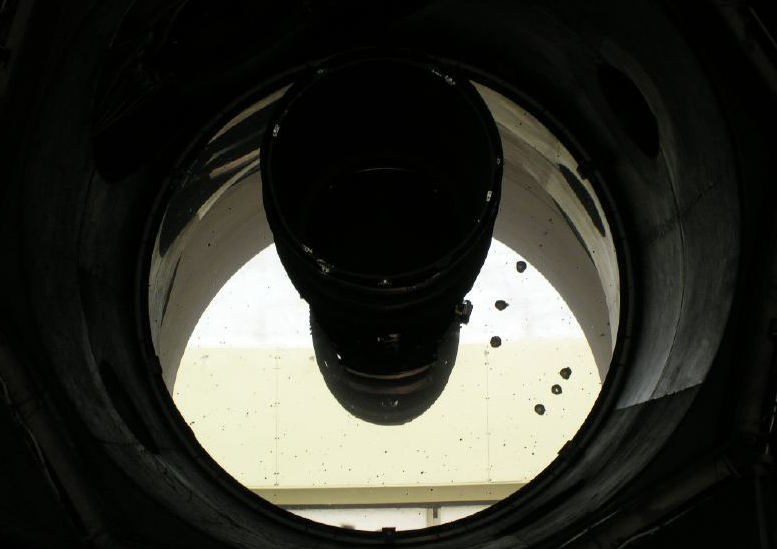
did you know that the 107'' telescope at McDonald observatory has bullet holes in the primary mirror?

Six bullet holes in the primary mirror of the 2.7m telescope at McDonald Observatory.
Photo credit: McDonald Observatory.

I used to observe with that telescope all the time during my PhD and it was always fun to walk down the solid tube to see the "damage" up close.   the six holes only block 1% of the light and were filed smooth and painted black to stop any reflected light from invading the observations!

there is a blog now dedicated to recording all these stories i keep hearing over a beer at the pub - and many more i havent yet heard in person!

you can read them all here: astro anecdotes.

Thursday, January 1, 2015

resolutions? me? what are you implying?

i'm not a huge fan of resolutions, even if i mentally throw out a few challenges for myself on new years day after reflecting on the accomplishments of the previous year.

new years day is posed as a "magic" day where we can overhaul our bad behaviours (usually overindulgence of the holiday season) and start anew.  we build elaborate time justifications to assuage our guilt.

i'm all for positive improvements in daily life, but i like to think in terms of the big picture, nicely summarized in the top five regrets of the dying, posted by the guardian. 


and of course the great bill watterson provides amusing perspective with his wonderful characters calvin and hobbes.