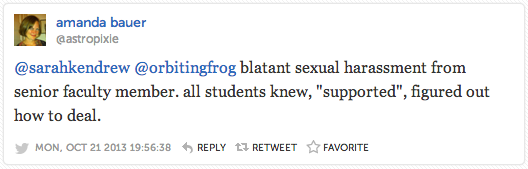
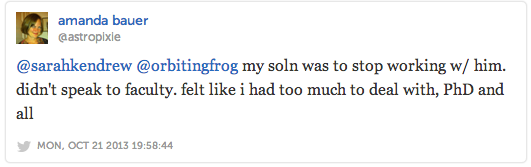
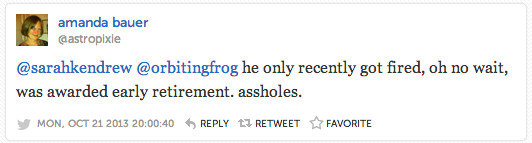
i helped organize a Women in Astronomy Workshop for the astronomical society of australia that took place in sydney this past friday the 13th of may. a major goal of the workshop was to raise awareness of general issues that face women, who ultimately drop out of the field in huge numbers within a few years of getting a PhD, and work towards finding solutions that can be applied by institutions and individuals to retain women in the profession and help them succeed.
so what is the problem exactly? the good news is that half the students attaining undergraduate science degrees from universities are women. not everyone is interested in attaining a degree beyond a bachelors degree, and that is absolutely reasonable, but of those that choose to pursue a PhD, roughly 40% are women (in australia anyway, the percentage worldwide is probably between 30% and 40% for astronomy). but within a few years of getting a PhD the percentage of participating women starts dropping dramatically, such that less than 8% of science professors are women and less than 4% of the top level positions at science institutions, universities, and observatories are appointed to women. from a management standpoint, it is an incredibly poor business practice to invest in the training of so many women only to lose all their knowledge, expertise, and training within a few short years.
keep in mind that this isnt a problem unique to astronomy or even academia: in the corporate sector, women hold something like 15% of the highest positions and board seats, and of all the people in parliament in the world, only 13% are women (source: see video below). it is not possible just simply to say - women have babies and then decide to drop out of their profession. this is true for some, partially because there is not yet adequate support and flexibility to help parents get back into the swing of things after such a career break, but overall the reasons are much more complex and not discussed openly enough, in my opinion.
one point made at the workshop that i had not fully appreciated before is that women tend not to say things in meetings (big or small) unless they are almost certain that what they are about to say is absolutely "correct." it is more common for men to throw out speculative ideas without regard to whether someone might show they are wrong, or without considering whether their statement might hold up an otherwise very tight meeting agenda.
one of the many reasons for this might be something called "the imposter syndrome," which affects most people to some degree, but much more often women, and potentially to a career-debilitating degree. the imposter syndrome describes the fear or worry that eventually someone will figure you out and realize you're not actually as smart and capable as they think you are! this can prevent you from negotiating contracts, asking for promotions, or applying for grants or positions that you think you probably wont get. of course women and men are equally capable, but the trouble is, you can never get something you don't apply/ask for, and the numbers show that men more often ask for promotions and apply for grants than women.
i recognize that it is my responsibility to speak up at meetings and make a vocal contribution of substance in order to be noticed, heard, acknowledged and appreciated, but i have to admit that it's almost always a challenge. when i attend a meeting or listen to a talk and a question or comment pops into my mind, inevitably my heart pounds loudly and i feel myself shaking a little from nerves over the prospect of speaking out to the group. you'd think after attaining a PhD, thinking about this astronomy stuff for so many years, and genuinely believing that i have ideas to offer the discussion, i would have gotten over these feelings, right? wrong. i still have to force myself to be brave and make the statement, to let my face turn beet red and risk sounding unknowledgeable or stupid.
i know i'm not the only one with these feelings and fears and the only way to help get over them is to be aware of them, admit them, talk about them, and have courage (i hope!)! that is part of what the workshop was about. almost 70 people showed up last friday, including several heads of university astronomy groups and the directors of observatories. considering there are only about 400 professional astronomers in australia, i thought the turn out was a great success! there were many female PhD students present, but the audience was noticeably lacking young male PhD students.
unfortunately, i think the tendency for most people is to think "well, i'm not sexist (or racist, etc...) and i don't understand how anyone could openly express such discrimination, so i don't have anything to gain by attending such a workshop."
it's not enough just to believe that you do not practice these behaviours and then ignore the issues entirely, because
we all have "unconscious biases" and many of your colleagues are systematically suffering because of them. we need to be aware of these biases in order to change the current state of career progression and not lose female talent from continuing along the academic (or corporate or political) pipeline.
instead of going on about more potential problems that lead to the decreased number of women at the highest levels, i will refer you to the video below for some other issues, and move on to sharing some practical suggestions that came out of the workshop that can be implemented by institutions and individuals.
action points for institutions:
action points for individuals:
please share any other ideas in the comments and i'll update this list if possible. for further reading, the american astronomical society provides a nice page of resources for all.
i'll leave you with yet another excellent TED talk by Facebook COO Sheryl Sandberg on "Why we have too few women leaders." she articulates some of the above, but also brings up several other very interesting points, including why it's true that "success and likability are positively correlated for men and negatively correlated for women."
so what is the problem exactly? the good news is that half the students attaining undergraduate science degrees from universities are women. not everyone is interested in attaining a degree beyond a bachelors degree, and that is absolutely reasonable, but of those that choose to pursue a PhD, roughly 40% are women (in australia anyway, the percentage worldwide is probably between 30% and 40% for astronomy). but within a few years of getting a PhD the percentage of participating women starts dropping dramatically, such that less than 8% of science professors are women and less than 4% of the top level positions at science institutions, universities, and observatories are appointed to women. from a management standpoint, it is an incredibly poor business practice to invest in the training of so many women only to lose all their knowledge, expertise, and training within a few short years.
keep in mind that this isnt a problem unique to astronomy or even academia: in the corporate sector, women hold something like 15% of the highest positions and board seats, and of all the people in parliament in the world, only 13% are women (source: see video below). it is not possible just simply to say - women have babies and then decide to drop out of their profession. this is true for some, partially because there is not yet adequate support and flexibility to help parents get back into the swing of things after such a career break, but overall the reasons are much more complex and not discussed openly enough, in my opinion.
one point made at the workshop that i had not fully appreciated before is that women tend not to say things in meetings (big or small) unless they are almost certain that what they are about to say is absolutely "correct." it is more common for men to throw out speculative ideas without regard to whether someone might show they are wrong, or without considering whether their statement might hold up an otherwise very tight meeting agenda.
one of the many reasons for this might be something called "the imposter syndrome," which affects most people to some degree, but much more often women, and potentially to a career-debilitating degree. the imposter syndrome describes the fear or worry that eventually someone will figure you out and realize you're not actually as smart and capable as they think you are! this can prevent you from negotiating contracts, asking for promotions, or applying for grants or positions that you think you probably wont get. of course women and men are equally capable, but the trouble is, you can never get something you don't apply/ask for, and the numbers show that men more often ask for promotions and apply for grants than women.
i recognize that it is my responsibility to speak up at meetings and make a vocal contribution of substance in order to be noticed, heard, acknowledged and appreciated, but i have to admit that it's almost always a challenge. when i attend a meeting or listen to a talk and a question or comment pops into my mind, inevitably my heart pounds loudly and i feel myself shaking a little from nerves over the prospect of speaking out to the group. you'd think after attaining a PhD, thinking about this astronomy stuff for so many years, and genuinely believing that i have ideas to offer the discussion, i would have gotten over these feelings, right? wrong. i still have to force myself to be brave and make the statement, to let my face turn beet red and risk sounding unknowledgeable or stupid.
i know i'm not the only one with these feelings and fears and the only way to help get over them is to be aware of them, admit them, talk about them, and have courage (i hope!)! that is part of what the workshop was about. almost 70 people showed up last friday, including several heads of university astronomy groups and the directors of observatories. considering there are only about 400 professional astronomers in australia, i thought the turn out was a great success! there were many female PhD students present, but the audience was noticeably lacking young male PhD students.
 |
| photo credit: bryan gaensler |
unfortunately, i think the tendency for most people is to think "well, i'm not sexist (or racist, etc...) and i don't understand how anyone could openly express such discrimination, so i don't have anything to gain by attending such a workshop."
it's not enough just to believe that you do not practice these behaviours and then ignore the issues entirely, because
we all have "unconscious biases" and many of your colleagues are systematically suffering because of them. we need to be aware of these biases in order to change the current state of career progression and not lose female talent from continuing along the academic (or corporate or political) pipeline.
instead of going on about more potential problems that lead to the decreased number of women at the highest levels, i will refer you to the video below for some other issues, and move on to sharing some practical suggestions that came out of the workshop that can be implemented by institutions and individuals.
action points for institutions:
- appoint diverse committee members to select speakers for conferences and recipients of awards and jobs. our unconscious natural tendency is to want to work with people who are like ourselves. this is mostly ok, or at least understandable, but ever notice, for example, how invited speakers at conferences are almost always men despite the fact that attendees are much more gender balanced? of course there are fewer women who have reached the career stage to give invited talks, but we have to start recognizing and encouraging and exposing the women that are in the field. diversifying selection committees is one way of taking action towards this goal.
- supply childcare at professional meetings, especially national meetings, so that parents can also benefit from the community and the networking possibilities for themselves and their students. and since we all know that a lot of ideas and new collaborations happen at the pub and over dinner, offer a few evenings of childcare as well so parents can spend some time with contacts outside of the rigorous daily conference sessions.
- offer more flexible working arrangements and small grants to encourage mothers and fathers to return to work while dealing with all the unpredictable time frames of children. examples: if you are advertising a position and it is possible to hire someone at part time, mention that in the ad! monash university offers a populate and publish maternity leave grant (what a name!?!). offer an option to take unpaid holidays for school breaks, provide onsite childcare, support a child friendly work environment (and tell employees!).
- encourage employees at all levels to participate in organized mentoring programs. if there is no program in place, develop one. dont make the mistake of assuming that "hard work and merit" are the only factors necessary for advancement for every individual. people also need encouragement and mentoring.
- in applications, ask for selected 5 years of publications, instead of just previous 5 years, to account for career breaks.
- institute a double blind academic journal refereeing system. (can someone explain to me why this isnt already in place? that's not the only problem with the academic journal racket though.)
- have open discussions about these issues inside your working groups!! encourage the acknowledgement of unconscious bias.
action points for individuals:
- speak up at meetings (be brave), network broadly, find mentors, set goals, know when to say no, apply for things!! do not let people assume that just because you do a task once that you will always be responsible for it, especially if it isnt gaining you any prestige or career benefit! dont fear that because you say no you wont be "liked." the point is not to be liked, but to be respected.
- goals should be specific, measurable, attractive to you, realistic, and time-framed (short- and long-term).
- find mentors! seek senior members who can be active mentors (both men and women), or widespread university programs, and do this at every stage in your career! recognize who in your department or institution is useful, successful, powerful, and/or influential and get to know them! seek their advice and mentorship.
- pay attention to words used when writing recommendation letters. (as a test, search through the adjectives you have written in a letter for a man and a letter for a woman. it was a telling exercise in unconscious bias for one speaker at the workshop)
- use appropriate titles (Dr, Prof, etc...) consistently for all colleagues regardless of gender.
- surround yourself with happy (not miserable) people in your working environment.
- make sure your romantic partner is a real partner in every sense of the word.
- be self aware of personal biases
please share any other ideas in the comments and i'll update this list if possible. for further reading, the american astronomical society provides a nice page of resources for all.
i'll leave you with yet another excellent TED talk by Facebook COO Sheryl Sandberg on "Why we have too few women leaders." she articulates some of the above, but also brings up several other very interesting points, including why it's true that "success and likability are positively correlated for men and negatively correlated for women."
UPDATE: if you're interested in this post, i recommend reading through the discussion happening inside the comments. i also encourage everyone to participate!