"lasting energy to feel alive."
from: serious eats
Thursday, January 31, 2008


Wednesday, January 30, 2008
a long time ago, in galaxies far, far away...
would you, could you be in austin, texas on friday, feb. 8th?? if so, then read on!
you're invited to a public astronomy lecture i'm giving for the austin astronomical society in a couple weeks! At 7:30pm on the evening of friday, february 8th, i'll be talking for 45 minutes about galaxy evolution and answering questions afterwards. No prior astronomy knowledge is necessary... enthusiasm is encouraged! :)
Title: "A long time ago in galaxies far, far, away..."
Topic: Galaxies found in the distant, early universe look and behave differently from those in our local universe. In this presentation, I describe triumphs and tribulations towards our understanding of these differences, by highlighting some fundamental insights into the current questions of galaxy evolution.
Treatise: Astronomy always fascinated Amanda as a child, but she never thought that it could be a feasible career. As an undergraduate at the University of Cincinnati, she studied French for a year before recognizing her true fascination with the Universe. She changed her major to physics, having no real idea of what she was getting herself into! Ten years later, she is preparing to graduate from the University of Texas at Austin with her PhD in Astronomy, still not entirely sure of what the Universe has in store for her, but excited to find out!
The meeting location is in RLM Room 4.102 (The Wheeler Lecture Hall), in the Robert Lee Moore Building, on the University of Texas at Austin campus at the southeast corner of Dean Keeton (26th) and Speedway. more info here:
http://www.austinastro.org/meetings.html
map and parking:
http://www.austinastro.org/meetings-map.gif
see you there!!
amanda
you're invited to a public astronomy lecture i'm giving for the austin astronomical society in a couple weeks! At 7:30pm on the evening of friday, february 8th, i'll be talking for 45 minutes about galaxy evolution and answering questions afterwards. No prior astronomy knowledge is necessary... enthusiasm is encouraged! :)
Title: "A long time ago in galaxies far, far, away..."
Topic: Galaxies found in the distant, early universe look and behave differently from those in our local universe. In this presentation, I describe triumphs and tribulations towards our understanding of these differences, by highlighting some fundamental insights into the current questions of galaxy evolution.
Treatise: Astronomy always fascinated Amanda as a child, but she never thought that it could be a feasible career. As an undergraduate at the University of Cincinnati, she studied French for a year before recognizing her true fascination with the Universe. She changed her major to physics, having no real idea of what she was getting herself into! Ten years later, she is preparing to graduate from the University of Texas at Austin with her PhD in Astronomy, still not entirely sure of what the Universe has in store for her, but excited to find out!
The meeting location is in RLM Room 4.102 (The Wheeler Lecture Hall), in the Robert Lee Moore Building, on the University of Texas at Austin campus at the southeast corner of Dean Keeton (26th) and Speedway. more info here:
http://www.austinastro.org/meetings.html
map and parking:
http://www.austinastro.org/meetings-map.gif
see you there!!
amanda
jupiter and venus under your finger!
this friday morning... feb 1, 2008... get up early and go outside! the very bright "morning star," venus, and the very large and bright planet, jupiter, are creeping closer to each other these days! they will be closest this friday morning with a separation of less than one degree!.... that means they will both be covered by one finger when you hold it out at arms length! here are a couple maps to help you find you way. look to the southeast at dawn....


the morning light should provide a perfect photographic setting! here's an image i saw at NASA's science site taken by Thierry Demange in france on january 23.

the morning light should provide a perfect photographic setting! here's an image i saw at NASA's science site taken by Thierry Demange in france on january 23.
Tuesday, January 29, 2008
powers of ten - galaxy song
the first video is the fabulous "powers of ten" video produced by architects charles and ray eames in 1977. this 10 minute feature shows the scale of the universe, from a cell in our body, to a galaxy out in space!
"Eventually, everything connects." — Charles Eames
this couple minute video shows the "powers of ten" movie while playing the brilliant "galaxy song" by eric idle. just as carl sagan's COSMOS has stood up the test of time, Paul Kohlmiller tells us that the galaxy song does too!
here's the original version of the "galaxy song", shown in the monty python classic film... "the meaning of life".
"Eventually, everything connects." — Charles Eames
this couple minute video shows the "powers of ten" movie while playing the brilliant "galaxy song" by eric idle. just as carl sagan's COSMOS has stood up the test of time, Paul Kohlmiller tells us that the galaxy song does too!
here's the original version of the "galaxy song", shown in the monty python classic film... "the meaning of life".
Monday, January 28, 2008
NASA "meatball" logo
i just read the print on the back of a NASA sticker i picked up at the AAS meeting in austin. i learned that the NASA insignia was designed in 1959 and has been referred to as the "meatball" since 1975!? the sphere represents a planet, the stars represent space, the red chevron wing represents aeronautics (the latest design in hypersonic wings at the time the logo was developed), and the spacecraft orbiting around the wing represents space travel.

i spy with my little eye, three stars close together in a line....
i still dont quite understand how the word "meatball" fits into this insignia, but i give huge props to NASA anyway, for giving out some great stuff this year at AAS! the calendar i picked up is fantastic, the image changing COBE/WMAP postcard is cool, and i love my little black cleat bag! thanks NASA! (where is this kind of positive press for NASA in the popular media?)
i spy with my little eye, three stars close together in a line....
i still dont quite understand how the word "meatball" fits into this insignia, but i give huge props to NASA anyway, for giving out some great stuff this year at AAS! the calendar i picked up is fantastic, the image changing COBE/WMAP postcard is cool, and i love my little black cleat bag! thanks NASA! (where is this kind of positive press for NASA in the popular media?)
Saturday, January 26, 2008
focus
what i strive for,
what i sometimes lack.
my excuse for many things,
my determination for others.
what motivates my intuition,
what hinders my instincts.
i'm driven by curiosity,
i'm delighted by discovery.
satisfaction is my motive,
happiness is my goal.
what i sometimes lack.
my excuse for many things,
my determination for others.
what motivates my intuition,
what hinders my instincts.
i'm driven by curiosity,
i'm delighted by discovery.
satisfaction is my motive,
happiness is my goal.
Friday, January 25, 2008
our moon and mercury
congratulations! everyone fared very well on this week's mercury or the moon game! without further hesitation... the bottom image in the game was mercury and the top was the moon! now its time to take a closer look at their similarities and differences between these two neighbors of ours.
take another guess....


could you tell the difference between them in the new images above? this time i think it's a bit easier because only the second image... the moon... reveals the sharp-edged darker regions called maria. the low-laying maria are flat planes that appear smooth in the image because they have fewer crater impacts.
there are a few maria visible on mercury, but they are small and not so defined. the striking brightness variations on mercury's surface might be caused by different things.

some people identify familiar objects on the surface of the moon based on the patterns resulting from the strong contrast between the dark maria, and the bright hilly highlands. i've never been able to find the man in the moon on my own. i think this phenomenon is somewhat subjective since people tend to find faces among patterns easily, but also because i'm always so distracted by the realization that the moon is a big huge rock flying around us in gigantic, predictable circles... that my eyes tend to not seek familiarity!
an obvious similarity between our two neighbors is their dense covering of impact craters. they both have large craters that are covered with smaller, younger craters. the fact that we can still see these craters tells us that neither object experiences strong storms caused by thick atmospheres, or lingering geologic activity. it appears to me from closer inspection of their surfaces, that mercury has more little tiny craters than the moon.

there are a couple very large impact sites seen on the moon. two of these seem much bigger than the largest impacts on the surface of mercury. the moon's largest impact craters also have large radial white lines shooting from them, caused by debris material thrown out at impact. i see some of these lines on mercury, but they are much fainter. i think this can be explained by mercury's higher surface gravity.
the planet mercury is larger than our moon. i can apply newton's law of universal gravitation to determine the relative strengths the gravitational forces one would feel on the surface of each orb...

if i'm sitting on mercury, then i say my mass is M1 in the equation above, mercury is M2 and the radius of mercury is r. I do the same thing for the moon and take the ratio of their F_. i discover that i weigh a little over 2 times more on mercury than i would on the moon! higher surface gravity means that the impacts on mercury did not throw debris as far as they did on our moon, and we see weaker white streaks coming out from each crater! it's interesting though that the brightest lines on mercury seem to radiate from very small impact craters.
what other differences do you see?
take another guess....
could you tell the difference between them in the new images above? this time i think it's a bit easier because only the second image... the moon... reveals the sharp-edged darker regions called maria. the low-laying maria are flat planes that appear smooth in the image because they have fewer crater impacts.
there are a few maria visible on mercury, but they are small and not so defined. the striking brightness variations on mercury's surface might be caused by different things.

some people identify familiar objects on the surface of the moon based on the patterns resulting from the strong contrast between the dark maria, and the bright hilly highlands. i've never been able to find the man in the moon on my own. i think this phenomenon is somewhat subjective since people tend to find faces among patterns easily, but also because i'm always so distracted by the realization that the moon is a big huge rock flying around us in gigantic, predictable circles... that my eyes tend to not seek familiarity!
an obvious similarity between our two neighbors is their dense covering of impact craters. they both have large craters that are covered with smaller, younger craters. the fact that we can still see these craters tells us that neither object experiences strong storms caused by thick atmospheres, or lingering geologic activity. it appears to me from closer inspection of their surfaces, that mercury has more little tiny craters than the moon.
there are a couple very large impact sites seen on the moon. two of these seem much bigger than the largest impacts on the surface of mercury. the moon's largest impact craters also have large radial white lines shooting from them, caused by debris material thrown out at impact. i see some of these lines on mercury, but they are much fainter. i think this can be explained by mercury's higher surface gravity.
the planet mercury is larger than our moon. i can apply newton's law of universal gravitation to determine the relative strengths the gravitational forces one would feel on the surface of each orb...

if i'm sitting on mercury, then i say my mass is M1 in the equation above, mercury is M2 and the radius of mercury is r. I do the same thing for the moon and take the ratio of their F_. i discover that i weigh a little over 2 times more on mercury than i would on the moon! higher surface gravity means that the impacts on mercury did not throw debris as far as they did on our moon, and we see weaker white streaks coming out from each crater! it's interesting though that the brightest lines on mercury seem to radiate from very small impact craters.
what other differences do you see?
low-G rides!
the fact that independent organizations are creating technology to go to space is awesome! friendly competition, in my opinion, can only benefit the potential for space travel by introducing more clever and efficient designs, that arent held back by the federal requirements faced by NASA and other worldwide, government-funded organizations!
here's an example... virgin galactic's SpaceShipTwo:

i'm not saying i'll be first in line to jump on the SpaceShipTwo next year when it launches. i dont have an extra $200,000 in my financial future, and i'm concerned enough with self-preservation to wait until they work out some of the bugs in the process (but seriously, if anyone wants to see an astropixie in space sooner than if she pursues the possibility of becoming a real astronaut.... please let me know). i know of another scientist who enjoys weightlessness: stephen hawking!
here's a flight simulation video from virgin galactic:
i wonder what the point is of raising the tail wings once in orbit since they lower them again to land. its seems that they would just block the view from inside the spacecraft! also, can you choose what side of the earth you fly over during your 4 minutes of weightlessness? (do i have a choice of color for my space suit shoes? is there a different, less bug-eye design for the helmet??) see more photos here.
here's a simulation of another potential low-G ride, called the spacedev dreamchaser designed by a different group, the benson space company.
this spacecraft seriously needs more windows... and a better theme song! otherwise, i'm glad to see competition in the field!
i'm eager to see what develops from these independent groups working towards space flight!
here's an example... virgin galactic's SpaceShipTwo:
i'm not saying i'll be first in line to jump on the SpaceShipTwo next year when it launches. i dont have an extra $200,000 in my financial future, and i'm concerned enough with self-preservation to wait until they work out some of the bugs in the process (but seriously, if anyone wants to see an astropixie in space sooner than if she pursues the possibility of becoming a real astronaut.... please let me know). i know of another scientist who enjoys weightlessness: stephen hawking!
here's a flight simulation video from virgin galactic:
i wonder what the point is of raising the tail wings once in orbit since they lower them again to land. its seems that they would just block the view from inside the spacecraft! also, can you choose what side of the earth you fly over during your 4 minutes of weightlessness? (do i have a choice of color for my space suit shoes? is there a different, less bug-eye design for the helmet??) see more photos here.
here's a simulation of another potential low-G ride, called the spacedev dreamchaser designed by a different group, the benson space company.
this spacecraft seriously needs more windows... and a better theme song! otherwise, i'm glad to see competition in the field!
i'm eager to see what develops from these independent groups working towards space flight!
carnial of space - 38
this weeks spacey entries are cleverly mixed into sam wise's mystery narrative, the adventures of shorty barlow, private eye. enjoy!!
Thursday, January 24, 2008
interest and rejection
i knew my looming dissertation defense and job-application period would provide a lot of moment-to-moment excitement in my life, but somehow i didnt anticipate the degree of my emotional highs and lows! i've finished applying for the majority of post-doctoral positions now, and am eagerly awaiting the results. i applied for about 20 positions and i've heard back from many of them. the unofficial-official date in the US for job offers in astronomy is february 15th. international posts tend to work on slightly different time frames, but they know that most applicants for US "prize fellowships" (hubble, spitzer, NSF, chandra, etc...) will hold out at least until the beginning of february to hear from these fellowships!
last week, i was disappointed to receive a scathing rejection *email* from one of the prize fellowship committee, reminding all of us applicants that any variation on the detailed application format was highly frowned upon. i understand this complaint from people who are reading over 100 5-page applications, but the message seemed so negative... especially compared to the email i received last night. this was absolutely the most wonderfully-worded rejection letter i could ever receive, starting out with....
i was so sad when i reached the gigantic BUT part of the letter. oh well.
the thing that gets me more than receiving a constructive-criticism-negative-rejection letter, is receiving absolutely no acknowledgement what-so-ever! i've worked on detailed applications, asked very busy collaborators to write me letters of recommendation, and then i've heard absolutely no response from multiple places. it's horrible to hear offers made to other people via the astrophysics job rumor mill but hear nothing personally!! it's like not calling someone back who asks you out on a date, just because you think it will let them down easier! i think thats horrible!! just tell me "no" so i can deal with it and move on!

aside from all this venting, i feel confident i will get a job that i will be perfectly happy with.... it's just a roller coaster ride to find it!
anyway, i've been ridiculously busy with planning my defense, interviewing for jobs, and teaching classes, so i havent been able to update as much as i'd like. the good news is that i met with my committee today and set a final date for my dissertation defense.... may 15th. eek! i will be ready by that point. it seems far away, but my family wanted to reserve plane tickets to come down and support me... which i very much appreciate!!
i came home tonight and celebrated the official date by opening my last bottle of fantastic chilean wine. woo hoo! cheers!
last week, i was disappointed to receive a scathing rejection *email* from one of the prize fellowship committee, reminding all of us applicants that any variation on the detailed application format was highly frowned upon. i understand this complaint from people who are reading over 100 5-page applications, but the message seemed so negative... especially compared to the email i received last night. this was absolutely the most wonderfully-worded rejection letter i could ever receive, starting out with....
My colleagues and I were very grateful to receive your impressive application, which is supported by strong letters of reference that indicate how highly your professors regard you and your research.
i was so sad when i reached the gigantic BUT part of the letter. oh well.
the thing that gets me more than receiving a constructive-criticism-negative-rejection letter, is receiving absolutely no acknowledgement what-so-ever! i've worked on detailed applications, asked very busy collaborators to write me letters of recommendation, and then i've heard absolutely no response from multiple places. it's horrible to hear offers made to other people via the astrophysics job rumor mill but hear nothing personally!! it's like not calling someone back who asks you out on a date, just because you think it will let them down easier! i think thats horrible!! just tell me "no" so i can deal with it and move on!

aside from all this venting, i feel confident i will get a job that i will be perfectly happy with.... it's just a roller coaster ride to find it!
anyway, i've been ridiculously busy with planning my defense, interviewing for jobs, and teaching classes, so i havent been able to update as much as i'd like. the good news is that i met with my committee today and set a final date for my dissertation defense.... may 15th. eek! i will be ready by that point. it seems far away, but my family wanted to reserve plane tickets to come down and support me... which i very much appreciate!!
i came home tonight and celebrated the official date by opening my last bottle of fantastic chilean wine. woo hoo! cheers!
Tuesday, January 22, 2008


Monday, January 21, 2008
view the COSMOS!
 don't forget that the discovery channel is currently airing all of carl sagan's COSMOS series!
Sunday, January 20, 2008
space girl dance
raquel... wow! just wow! this is an awesome intergalactic dance party if i've ever seen one!!
don't forget to notice the great sculptures that were apparently part of the ruta de la amistad public sculpture project at the 1968 olympics in mexico city ;)
don't forget to notice the great sculptures that were apparently part of the ruta de la amistad public sculpture project at the 1968 olympics in mexico city ;)
massive or minuscule?
i've always thought the similarity between patterns found at gigantic scales and itty-bitty scales was fascinating!! here are two examples of spiral structure found in the universe. can you tell what they are?


the spiral structure of the second image is probably familiar to most regular readers of this blog as belonging to a distant galaxy... in this case, the beautiful whirlpool galaxy (M51).
the first colorful image demonstrates the spiral structure of the very powerful hurricane hugo that swept thru the atlantic ocean in 1989.
they look amazingly similar, eh? a major difference being that hurricane hugo was a few hundred miles across, whereas the whirlpool galaxy is about 50,000 light years (300,000,000,000,000,000 miles) across and about 30 million light years away! the difference in physical scale is immense, but the logarithmic spiral patterns observed in their structure are nearly identical.
here's another example...


the first image shows large scale structures in the universe from a computer simulation. you can see the web-like structure of many many galaxies in the yellow-ish clusters, with filaments of galaxies, gas and dark matter connecting the large clusters.
the second image shows how particular types of neurons in the brain of a mouse connect to one another.
the overall structures look amazingly similar between these vastly different natural phenomena!! i find this especially amazing considering the size difference between these two phenomena is 22 orders of magnitude!!!
if only we could reconcile or find any similarity between the two theories governing the most extreme scales in the universe.... the quantum mechanical understanding of the incredibly small... and the general relativity understanding of the unfathomably large.


the spiral structure of the second image is probably familiar to most regular readers of this blog as belonging to a distant galaxy... in this case, the beautiful whirlpool galaxy (M51).
the first colorful image demonstrates the spiral structure of the very powerful hurricane hugo that swept thru the atlantic ocean in 1989.
they look amazingly similar, eh? a major difference being that hurricane hugo was a few hundred miles across, whereas the whirlpool galaxy is about 50,000 light years (300,000,000,000,000,000 miles) across and about 30 million light years away! the difference in physical scale is immense, but the logarithmic spiral patterns observed in their structure are nearly identical.
here's another example...


the first image shows large scale structures in the universe from a computer simulation. you can see the web-like structure of many many galaxies in the yellow-ish clusters, with filaments of galaxies, gas and dark matter connecting the large clusters.
the second image shows how particular types of neurons in the brain of a mouse connect to one another.
the overall structures look amazingly similar between these vastly different natural phenomena!! i find this especially amazing considering the size difference between these two phenomena is 22 orders of magnitude!!!
if only we could reconcile or find any similarity between the two theories governing the most extreme scales in the universe.... the quantum mechanical understanding of the incredibly small... and the general relativity understanding of the unfathomably large.
Saturday, January 19, 2008
aristotle socrates
he's a modern day theoretical astrophysicist at UC Santa Barbara. he has a great name, and produces good science! its a good thing he's a theorist because we're both in the job market right now!
Thursday, January 17, 2008
deceiving first glance from MESSENGER
look at this image.... what do you see?

at first glance, it looks like our moon! there are craters, straight lines of stuff thrown out from the meteorite impacts that caused the craters, light spots, darker patches, etc...
but this is not our moon, its the closest planet to our sun... mercury! this is one of the first images from the MESSENGER spacecraft as it orbits our inner solar system (of course MESSENGER is an acronymn: MErcury Surface, Space ENvironment, GEochemistry, and Ranging). this is also the first detailed image humans have seen of the surface of mercury since the Mariner 10 spacecraft flew by 35 years ago!
the image was taken two days ago on monday, january 14, 2008 at a distance from the planet of 27,000 kilometers (about 17,000 miles) and can resolve things as small as 10 kilometers (6 miles) in size!
some major questions the MESSENGER spacecraft hopes to help us answer include why mercury is so dense, what mercury's magnetic fields are like, and what are the unusual materials at mercury's poles? mercury's poles are never fully in or out of sunlight. the light grazes the tops of the craters, but the deep insides remain dark..... expect at radar wavelengths. the fact that these inner crater regions of the poles reflect radar wavelengths, could be indicative of the presence of water ice! why and how could water ice survive so close to the sun?!
more exciting insights from the MESSENGER spacecraft soon!
at first glance, it looks like our moon! there are craters, straight lines of stuff thrown out from the meteorite impacts that caused the craters, light spots, darker patches, etc...
but this is not our moon, its the closest planet to our sun... mercury! this is one of the first images from the MESSENGER spacecraft as it orbits our inner solar system (of course MESSENGER is an acronymn: MErcury Surface, Space ENvironment, GEochemistry, and Ranging). this is also the first detailed image humans have seen of the surface of mercury since the Mariner 10 spacecraft flew by 35 years ago!
the image was taken two days ago on monday, january 14, 2008 at a distance from the planet of 27,000 kilometers (about 17,000 miles) and can resolve things as small as 10 kilometers (6 miles) in size!
some major questions the MESSENGER spacecraft hopes to help us answer include why mercury is so dense, what mercury's magnetic fields are like, and what are the unusual materials at mercury's poles? mercury's poles are never fully in or out of sunlight. the light grazes the tops of the craters, but the deep insides remain dark..... expect at radar wavelengths. the fact that these inner crater regions of the poles reflect radar wavelengths, could be indicative of the presence of water ice! why and how could water ice survive so close to the sun?!
more exciting insights from the MESSENGER spacecraft soon!
Wednesday, January 16, 2008
mandalorian

i just wanted to point out a couple things:
1) today someone arrived at this blog after searching google for "muslim origami fortune teller."
2) some of my nicknames include manda banana, astropixie (obviously), mandi mizchief, and now... mandalorian (discovered via the wookipedia). thank chris!
3) this is my 321st post.
4) tonight i went to see toni price sing her heart out at the continental club in austin and the stamp on my hand says "fuck cancer."
the moon occults the tiny little dipper
the moon rises later each night as it moves about 12 degrees east around the earth each day. you'll see the half-illuminated moon high in the sky tonight, then it will rise about 50 minutes later tomorrow and have slightly more illumination. it sits above and to the right of the pleiades "tiny little dipper" star cluster tomorrow night on its way to an occultation of pleiades late thurs night!

if you recall, a similar occultation occured last november reminding us how steady the earth and the moon are in out orbit!
if you recall, a similar occultation occured last november reminding us how steady the earth and the moon are in out orbit!
Tuesday, January 15, 2008
LFHCfS (Hair Club)
a friend just pointed me in the direction of a very funny feature on the blog, improbable research: research that makes people LAUGH and then THINK. this feature is the Luxuriant Flowing Hair Club for Scientists or LFHCfS... since every good anything has a proper acronymn!
i was happy to see recent PhD and former Queen rockstar, brian may, inducted into the club.

if only i'd known about this club last week at the AAS meeting... i'd have several new candidates to nominate! i'll work at collecting the necessary nomination photos!
i was happy to see recent PhD and former Queen rockstar, brian may, inducted into the club.
if only i'd known about this club last week at the AAS meeting... i'd have several new candidates to nominate! i'll work at collecting the necessary nomination photos!
Monday, January 14, 2008
planetary storm systems
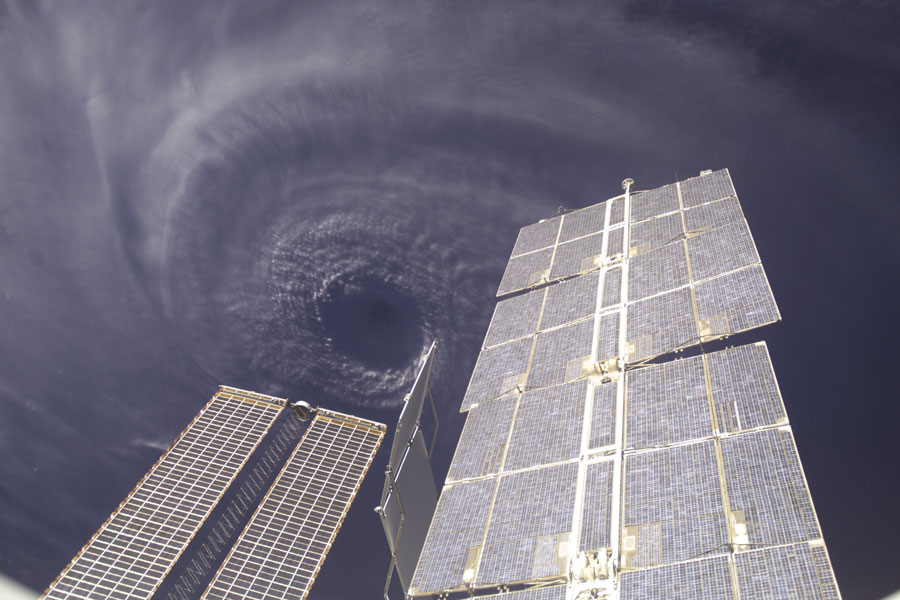
when i first looked at the full size version of the above above, i saw two large crazy sky-scraping buildings with a legendary cloud system above them! but then my perspective swapped to the outside looking in...
today APOD shares with us this dizzying image of hurricane ivan from the international space station. this hurricane was largest atlantic hurricane of 2004... the 10th most powerful ever recorded on planet earth!
looks surprisingly different than the giant red spot storm of jupiter.
Sunday, January 13, 2008

Tuesday, January 8, 2008
cosmic christmas lights
globular clusters are collections of thousands of stars, gravitationally bound together. a popular cluster visible with the naked eye is the pleiades cluster. the stars in a cluster orbit around the center of the cluster, just as the planets in our solar system orbit around the sun. it takes the stars a lot longer to move one time around their system though.... about 100,000 years! during our short human lives, it is very difficult to detect the motion of individual stars around a cluster!
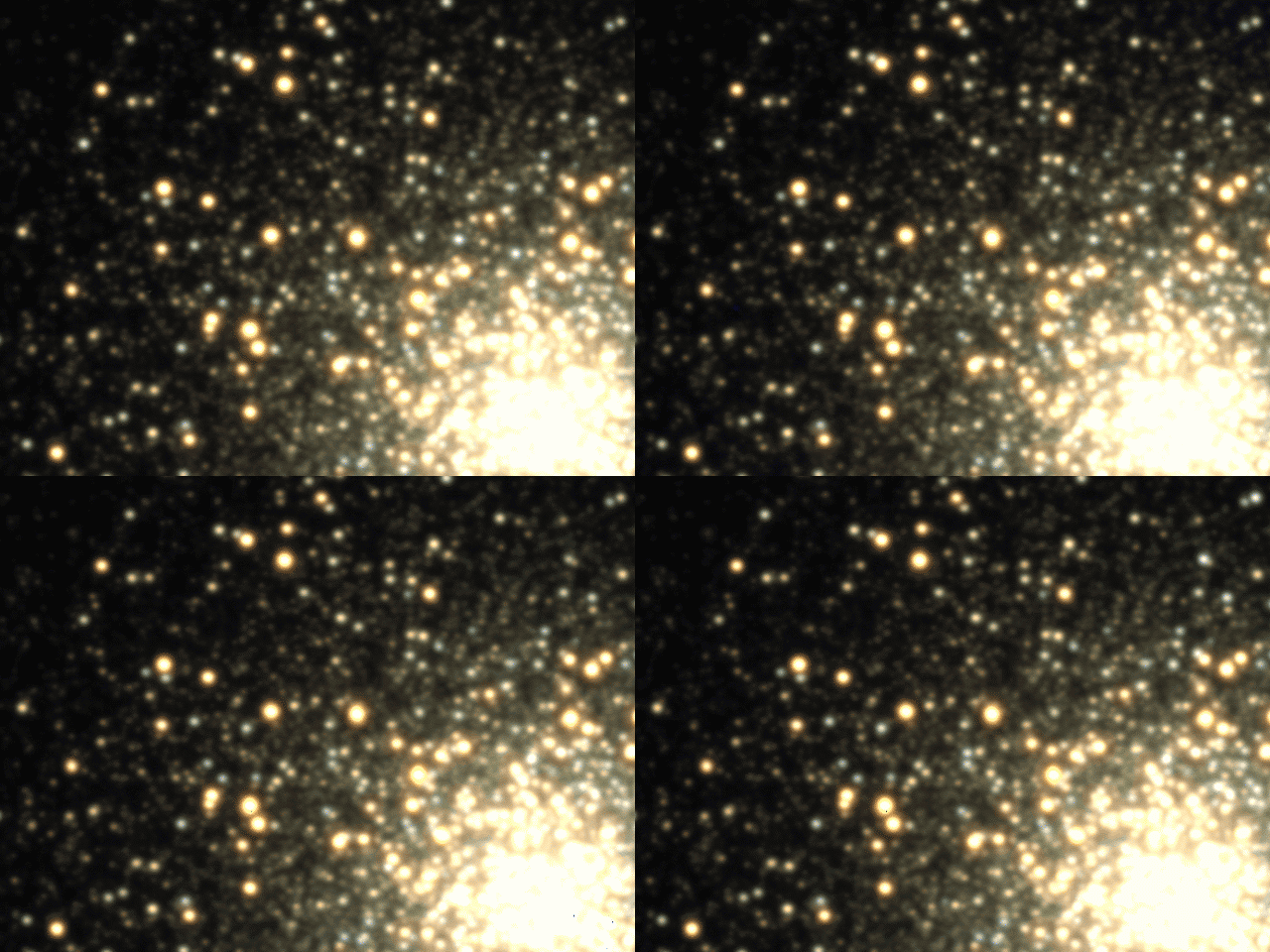
a different method for studying the stars in a globular cluster, is to look at how the light levels of individual stars change... which occur for some stars on much shorter timescales. that brings me to the fascinating time-lapse movie of the globular cluster, M3 (NGC 5272), shown below.
cool, huh?! listen to whatever music you want, and its sort of like the popular choreographed christmas light displays!!
the movie above was created from 4 images taken within the same night! most of the stars remain the same brightness and color, but many stars change their brightness level drastically and become more blue over over this very short time period! these variable stars are called RR Lyrae stars (named after the first one identified - the RR star in the constellation Lyra).
these stars are different than our sun and the other stars in the image because they get larger and smaller over the course of a couple days. they inflate and deflate like a balloon, over and over, because of the specific nuclear reactions happening in their cores. changing the size of a star changes its surface area and temperature, and therefore how much light it produces and how bright it appears to our eyes. the RR Lyrae appears brightest when it is smallest in size and hottest is temperature.
once you identify RR Lyrae stars, you can use their changing brightness to accurately determine how far away they are!
thanks to julianne at cosmic variance who reminded me of this great image while she described the boost of funding the Large Synoptic Survey Telescope just received from Charles Simonyi and Bill Gates!!
a different method for studying the stars in a globular cluster, is to look at how the light levels of individual stars change... which occur for some stars on much shorter timescales. that brings me to the fascinating time-lapse movie of the globular cluster, M3 (NGC 5272), shown below.
cool, huh?! listen to whatever music you want, and its sort of like the popular choreographed christmas light displays!!
the movie above was created from 4 images taken within the same night! most of the stars remain the same brightness and color, but many stars change their brightness level drastically and become more blue over over this very short time period! these variable stars are called RR Lyrae stars (named after the first one identified - the RR star in the constellation Lyra).
these stars are different than our sun and the other stars in the image because they get larger and smaller over the course of a couple days. they inflate and deflate like a balloon, over and over, because of the specific nuclear reactions happening in their cores. changing the size of a star changes its surface area and temperature, and therefore how much light it produces and how bright it appears to our eyes. the RR Lyrae appears brightest when it is smallest in size and hottest is temperature.
once you identify RR Lyrae stars, you can use their changing brightness to accurately determine how far away they are!
thanks to julianne at cosmic variance who reminded me of this great image while she described the boost of funding the Large Synoptic Survey Telescope just received from Charles Simonyi and Bill Gates!!
Monday, January 7, 2008

Comet 8P/Tuttle
here's a beautiful composite image of comet 8P/Tuttle passing very close in our sky to the triangulum galaxy, M33.

M33 is a popular spiral galaxy that lives relatively close to our milky way... somewhere around 3 million light years away. comet 8P/Tuttle is roughly 40 million kilometers (or 2 light-minutes) away. M33 looks blue due to the many regions where young stars are forming in the spiral arms. the comet looks green/teal due to its chemical composition.
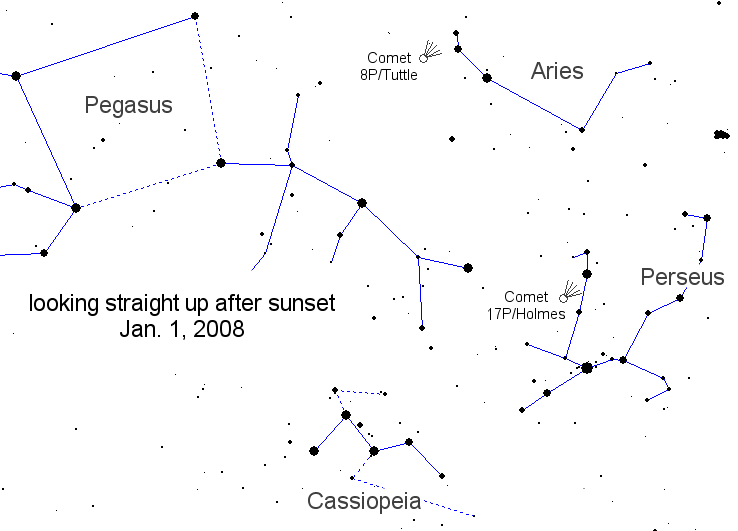
on a clear night you might be able to see the comet from northern latitudes with your eye (although i havent had any luck from austin). binoculars or a small telescope should give a good view. while youre at it, try to find the still-bright comet holmes!
M33 is a popular spiral galaxy that lives relatively close to our milky way... somewhere around 3 million light years away. comet 8P/Tuttle is roughly 40 million kilometers (or 2 light-minutes) away. M33 looks blue due to the many regions where young stars are forming in the spiral arms. the comet looks green/teal due to its chemical composition.
on a clear night you might be able to see the comet from northern latitudes with your eye (although i havent had any luck from austin). binoculars or a small telescope should give a good view. while youre at it, try to find the still-bright comet holmes!
Saturday, January 5, 2008
the astronomers are coming!!
next week austin hosts the 211th american astronomical society meeting. i'm super excited... and a bit anxious. in addition to the typical socializing, shenanigans, science, and sight seeing, i'll be giving a talk describing my dissertation research, trying to get some insightful research ideas, and schmoozing with people hiring post-docs!
for those who will be in austin, there is an official blogger meet-up tuesday night with the usual suspects: phil plait of bad astronomy and fraser cain of universe today. i'll show up at the iron cactus around 9pm to enjoy a margarita and good conversation.
look for exciting astronomy news revealed to the world all next week!
for those who will be in austin, there is an official blogger meet-up tuesday night with the usual suspects: phil plait of bad astronomy and fraser cain of universe today. i'll show up at the iron cactus around 9pm to enjoy a margarita and good conversation.
look for exciting astronomy news revealed to the world all next week!
Friday, January 4, 2008
clock of nines
the 7 o'clock isn't exactly equal to 7, but i dont mind rounding up.... i'm not that big of a nerd! cool clock!

link: here
link: here
quadrantids meteor shower tonight
you have to say that word out loud... quadrantids.
if youre up late tonight in the northern hemisphere, look to the northeast... try to find the big dipper and then watch for bright meteors shooting across the sky! the quadrantids meteor showers have been observed and recorded since 1825


if you stay up late enough.... or wake up early enough tomorrow morning, look up at the incredibly bright planet venus, and the sliver moon nearby. enjoy!
if youre up late tonight in the northern hemisphere, look to the northeast... try to find the big dipper and then watch for bright meteors shooting across the sky! the quadrantids meteor showers have been observed and recorded since 1825
if you stay up late enough.... or wake up early enough tomorrow morning, look up at the incredibly bright planet venus, and the sliver moon nearby. enjoy!
Thursday, January 3, 2008



earth at perihelion
its cold right now in the northern hemisphere (even in austin), but the earth is closer to the sun today than it has been for the last year! this position is called perihelion. the earth's orbit around the sun is very nearly circular, but not quite. the image below shows circular orbits as dotted lines for mercury, earth, and mars... and the actual, elliptical orbits as solid lines.

you can see that the earth is very close to having a circular orbit (e = 0.0), but its slight eccentricity (e > 0) means that there is a point during our year where we are closest to the sun - today! happy perihelion!
intuitively, one might think that we would be closest to the sun during the hottest part of the year. but remember that the seasons are opposite for the northern and southern hemispheres. the reason for earth's seasons is because of the tilt of earth's spin axis relative the plane through which we move around the sun.
the effect of the changing distance between the earth and the sun, in combination with the earths spin axis, reveals itself by the analemma - the figure 8 pattern that the sun makes across the sky. the image above results from combining images taken at local noon on various days throughout a single year (see a movie here).
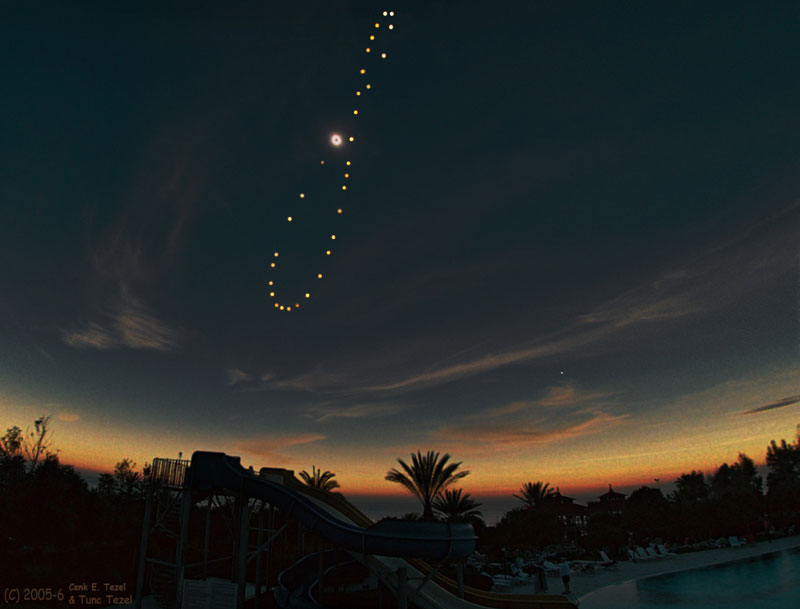
the point when the sun is highest in the analemma (and abve the horizon) is the summer solstice, and the lowest point represents the winter solstice. the rising and lowering of the sun's position in our sky is caused by the earth's tilted axis. the width of the analemma and the fact that the top loop is smaller than the bottom loop are due to the ellipticity of our orbit around the sun... the earth moves more quickly through space when we are closer to the sun in our orbit.
so what do analemmas look like on other planets in the solar system? here's a digital illustration of the martian analemma:

each planet has a different shape to its analemma because each planet in our solar system has a unique combination of axis tilt and eccentricity of orbit. to explore the analemmas from other planets, i send you off to analemma.com which has some very interesting, and slightly disorienting, videos!
you can see that the earth is very close to having a circular orbit (e = 0.0), but its slight eccentricity (e > 0) means that there is a point during our year where we are closest to the sun - today! happy perihelion!
intuitively, one might think that we would be closest to the sun during the hottest part of the year. but remember that the seasons are opposite for the northern and southern hemispheres. the reason for earth's seasons is because of the tilt of earth's spin axis relative the plane through which we move around the sun.
the effect of the changing distance between the earth and the sun, in combination with the earths spin axis, reveals itself by the analemma - the figure 8 pattern that the sun makes across the sky. the image above results from combining images taken at local noon on various days throughout a single year (see a movie here).
the point when the sun is highest in the analemma (and abve the horizon) is the summer solstice, and the lowest point represents the winter solstice. the rising and lowering of the sun's position in our sky is caused by the earth's tilted axis. the width of the analemma and the fact that the top loop is smaller than the bottom loop are due to the ellipticity of our orbit around the sun... the earth moves more quickly through space when we are closer to the sun in our orbit.
so what do analemmas look like on other planets in the solar system? here's a digital illustration of the martian analemma:
each planet has a different shape to its analemma because each planet in our solar system has a unique combination of axis tilt and eccentricity of orbit. to explore the analemmas from other planets, i send you off to analemma.com which has some very interesting, and slightly disorienting, videos!
Tuesday, January 1, 2008
the real stars of new years eve
if youre running around outside tonight at your local midnight, making noise and welcoming the new year... look up! find the orion constellation, focus on the bright orange mars, and reflect on the earth's recent trip around the sun.
the three stars of orions belt point down toward the bright star sirius.

the the left of the star betelgeuse, in orion, is the bright planet, mars.

enjoy! i hope the new year brings happiness for you all!
the three stars of orions belt point down toward the bright star sirius.
the the left of the star betelgeuse, in orion, is the bright planet, mars.
enjoy! i hope the new year brings happiness for you all!
sagan's cosmos of TV!
carl sagan has remained a very positive influence in my life and has written amazingly inspirational prose about the human perspecive and our place in the universe.
sagan and ann druyan produced a TV series called COSMOS in the 1980's, and i'm happy to share that the Discovery Channel will be airing it in its entirety starting january 8th!!
the COSMOS series doesnt have the super high-tech animations that are shown in the universe series on the history channel, because it was created in the 80's. but its information is still up to date, and i like the amount that it left to be filled in by my imagination.... and the passion and wonder portrayed in this series is unrivaled in anything i've seen since.
you can see little snippets from the COSMOS series on evolution and the timeframe for human existence in the universe.
here's the beautiful introduction to the TV series:
enjoy!
sagan and ann druyan produced a TV series called COSMOS in the 1980's, and i'm happy to share that the Discovery Channel will be airing it in its entirety starting january 8th!!
the COSMOS series doesnt have the super high-tech animations that are shown in the universe series on the history channel, because it was created in the 80's. but its information is still up to date, and i like the amount that it left to be filled in by my imagination.... and the passion and wonder portrayed in this series is unrivaled in anything i've seen since.
you can see little snippets from the COSMOS series on evolution and the timeframe for human existence in the universe.
here's the beautiful introduction to the TV series:
enjoy!
Subscribe to:
Posts (Atom)