when boredom creates awesomeness:
Saturday, December 29, 2007


Thursday, December 27, 2007
moon passes near regulus
the moon is passing quite close to many objects this month as it travels thru the sky. tomorrow night (thursday dec. 27), the moon sits next to the bright star regulus and hangs above the planet saturn. saturn rises around 11 pm in the east and then moves up and across the sky throughout the night. enjoy!


Wednesday, December 26, 2007
Tuesday, December 25, 2007


Monday, December 24, 2007
the moon and mars
happy solstice everyone (a few days late!)!
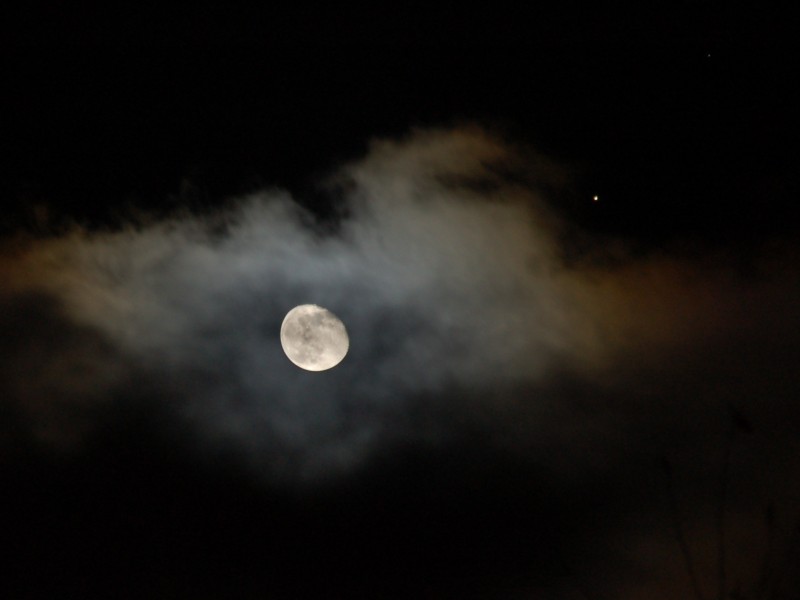
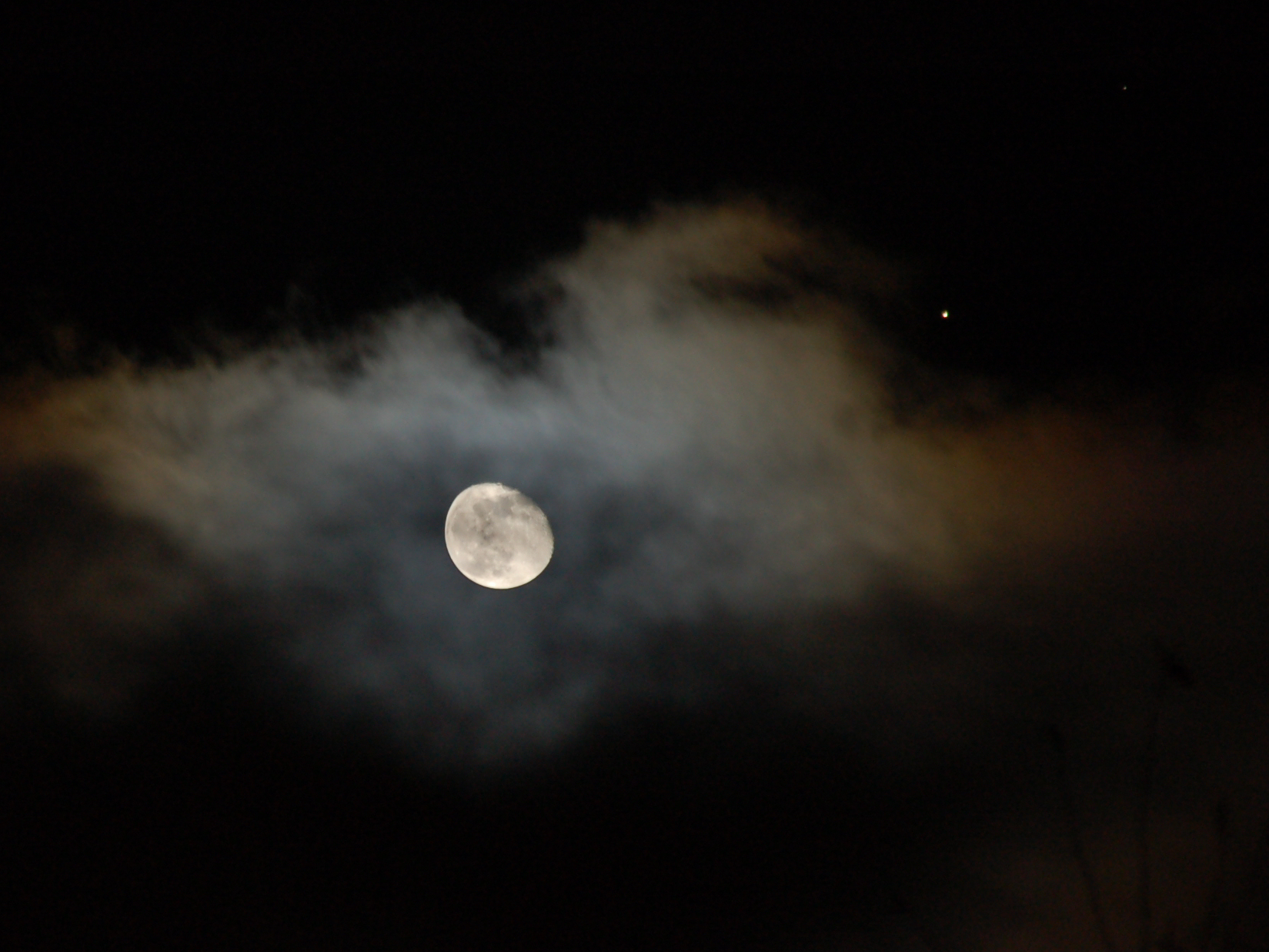
did you notice the full moon tonight with the bright planet mars right next to it? for some lucky people around the world, the moon passed right in front of the orange-y planet, but not all of us could see this occult.
today's feature image comes from my very own older sister, Lara.

another nice shot from APOD today: an almost full moon as it passed near mars in our sky last month.
did you notice the full moon tonight with the bright planet mars right next to it? for some lucky people around the world, the moon passed right in front of the orange-y planet, but not all of us could see this occult.
today's feature image comes from my very own older sister, Lara.

another nice shot from APOD today: an almost full moon as it passed near mars in our sky last month.
whole corn - cornhole
i've played this game almost exclusively in the midwest part of the US. i didnt realize how popular it has become in the cincinnati, ohio area. apparently this game is developing cultish participation levels! watching this tribute video yesterday brought tears to my sisters eyes!!
and if you thought that was funny, watch some more of the clever videos by rhett and link. i particularly like their rendition of the reading rainbow theme song and the drive-thru rap: healthy version.
and if you thought that was funny, watch some more of the clever videos by rhett and link. i particularly like their rendition of the reading rainbow theme song and the drive-thru rap: healthy version.
Wednesday, December 19, 2007

welcome, mars!
tonight mars is at its closest point to us for the next 8 years.... at about 88 million km (55 million miles) away! this is pretty close, but still 32 million km (20 million miles) farther away than in august 2003 (you may recall the "mars will look as big as the moon" hoax emails that started around that time).
mars looks bright and orange as it slowly moves across the evening sky near orion.

mars looks bright and orange as it slowly moves across the evening sky near orion.
painting the world?
"a single tin of paint can pollute millions of litres of water."

effective message from the world wildlife fund (WWF).

effective message from the world wildlife fund (WWF).
grazing lunar occultation of saturn
they have chosen the top astronomy pictures of 2007 at APOD. there are some great shots, but surprisingly, they dont overlap with phit plait's astronomy images of the year. good thing we're making such good use of our telescopes!
my favorite shot by APOD, was taken in march when the moon passed just in front of saturn, barely blocking some of the rings and the side of the planet! a grazing lunar occultation!
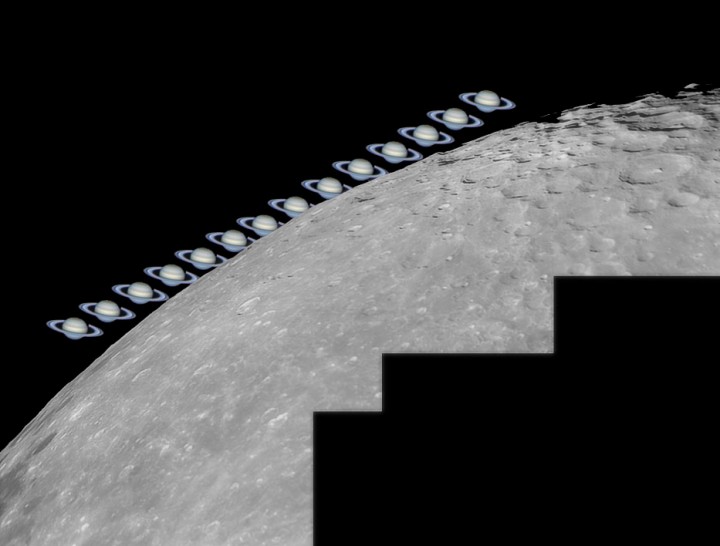
to create the above image, pete lawrence of digital-astronomy, took one shot every 90 seconds during the occultation.... the moon is moving pretty quickly! then he adjusted each image so the light from saturn and the moon would contrast each other nicely instead of the bright moon dominating the entire image. then he added the frames together for this wonderful composite image!
my favorite shot by APOD, was taken in march when the moon passed just in front of saturn, barely blocking some of the rings and the side of the planet! a grazing lunar occultation!
to create the above image, pete lawrence of digital-astronomy, took one shot every 90 seconds during the occultation.... the moon is moving pretty quickly! then he adjusted each image so the light from saturn and the moon would contrast each other nicely instead of the bright moon dominating the entire image. then he added the frames together for this wonderful composite image!
Monday, December 17, 2007

Sunday, December 16, 2007
a question of consciousness
i wonder about the distinctly human quirk of consciousness. on earth, humans are the only creatures (as far as we can tell) who have developed the ability to recognize consciousness and contemplate existence. (i think we would live very different lives on this planet had we been competing with another intelligent species all along, in addition to ourselves and each other.) many animals share our five senses and even though the details vary greatly, only humans have developed the capacity to reflect on consciousness, invent written languages, and think deeply about things that are not directly related to our daily survival.
 what about life on other planets (which surely exists)? does biological evolution always create consciousness after some period of time? maybe other life forms have seven senses or breathe primarily nitrogen, but if they've developed intelligence as we've come to know it, surely they have thought about science and psychology. my presumption is that the fundamental laws of physics we've discovered would be the same for these life forms. even if no creatures in the universe fully understand the fundamental laws, as we certainly don't, the laws should be equivalent. gravity would behave in the same, inescapable, familiar way that the force between the life form and its planet would decrease by the square of the distance between the life form on the surface and the center of the planet. this seems reasonable to me... but what about consciousness? is it always the same?
just as animals on earth have no concept of cognitive awareness, is there an equivalent level of something that we humans have not evolved to be able to feel/think/recognize/attain/comprehend? i try to think of emotions that could exist that humans have not experienced, but my list of possibilities (empathy, love, fear, depression, anger, etc...) seems as comprehensive as i can contemplate! will our human creation of potentially conscious robots give us more insight to the possibilities?
i mean, i'm not really looking to further complicate my humanoid life with even more concepts that i don't understand... but its fun for this feeling, loving, learning, creating, evolving, intelligent, bipedal, earth-bound, carbon-based, biological, talking collection of atoms to contemplate such circumstances!
these thoughts developed today as i watched the following video from the march 2007 TED talk by the 1969 Nobel Prize winner in physics, murray gell-mann. his talk is titled: beauty and truth in physics.
 what about life on other planets (which surely exists)? does biological evolution always create consciousness after some period of time? maybe other life forms have seven senses or breathe primarily nitrogen, but if they've developed intelligence as we've come to know it, surely they have thought about science and psychology. my presumption is that the fundamental laws of physics we've discovered would be the same for these life forms. even if no creatures in the universe fully understand the fundamental laws, as we certainly don't, the laws should be equivalent. gravity would behave in the same, inescapable, familiar way that the force between the life form and its planet would decrease by the square of the distance between the life form on the surface and the center of the planet. this seems reasonable to me... but what about consciousness? is it always the same?
just as animals on earth have no concept of cognitive awareness, is there an equivalent level of something that we humans have not evolved to be able to feel/think/recognize/attain/comprehend? i try to think of emotions that could exist that humans have not experienced, but my list of possibilities (empathy, love, fear, depression, anger, etc...) seems as comprehensive as i can contemplate! will our human creation of potentially conscious robots give us more insight to the possibilities?
i mean, i'm not really looking to further complicate my humanoid life with even more concepts that i don't understand... but its fun for this feeling, loving, learning, creating, evolving, intelligent, bipedal, earth-bound, carbon-based, biological, talking collection of atoms to contemplate such circumstances!
these thoughts developed today as i watched the following video from the march 2007 TED talk by the 1969 Nobel Prize winner in physics, murray gell-mann. his talk is titled: beauty and truth in physics.
holiday cards
if youre still looking for holiday cards to give out with your presents, here are some of my favorites. the clever folks at hubblesite have created some wonderfully inspired hubble holiday cards.


i also found a neat collection of lucasfilm holiday cards over the last 30 years!


i also found a neat collection of lucasfilm holiday cards over the last 30 years!
Friday, December 14, 2007
disappearing car door!!
why fix something when it's not broken? since cars have had doors, the doors have pretty much behaved the exact same way. i had never even considered an alternative to the way a door opens, because i never had a problem with existing door hinges.... but i'm glad someone was thinking about it because this is awesome!!!!
disappearing car door: link
disappearing car door: link
best astronomy images of 2007
as the year winds down, people seem to like to produce their "best of" lists for the year. the bad astronomer, phil plait, has produced a beautiful list of his top ten astronomy pictures of 2007, complete with informative explanations about what youre seeing! check it out!
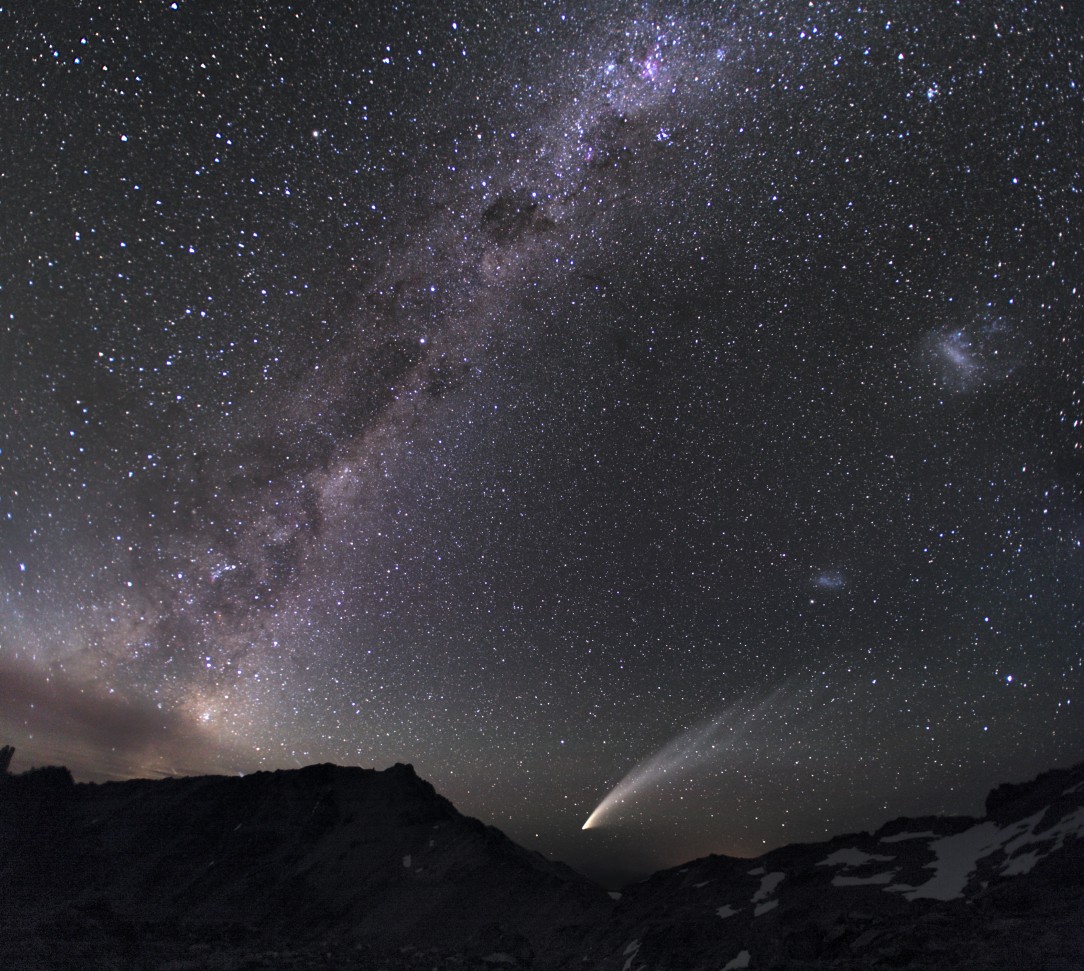
i'll add a favorite picture of mine from this year.... comet mcnaught over patagonia in south america, showing the disk of our milky way galaxy in addition to the two strange galaxies: the large and small magellanic clouds! (see full explanation here)
i'll add a favorite picture of mine from this year.... comet mcnaught over patagonia in south america, showing the disk of our milky way galaxy in addition to the two strange galaxies: the large and small magellanic clouds! (see full explanation here)
Thursday, December 13, 2007
spiders want to go to space too!
the space shuttle atlantis sits peacefully waiting for its launch for STS-122. the launch has been scheduled and postponed many times in recent weeks. its currently scheduled for launch on january 2, 2008. a nice new year treat! in the meantime, folks at NASA have been preparing for the launch and fighting off giant spiders that might want to tag along into space ;)
Wednesday, December 12, 2007
UTs old telescope
last weekend was the last for my stint as the star party host for UT's old telescope. friday night's sky cleared up nicely, but only 2 people showed up to the party! so i had lots of time to look at mars, and the pleiades and take pictures of the telescope. the main lens in this refracting telescope is 9-inches in diameter and was crafted in the 1890s! the mount-structure was built in the 1930's and it has been there ever since!

there are absolutely no electronic parts running this old beast. the telescope stays pointed at stars because of the mechanical clock drive.

there's a weight that hangs down inside the mount and slowly unwinds the gears by the force of gravity. the system is calibrated to move the telescope very slowly in order to move the telescope in the opposite direction of earths rotation, but at the exact same rate. in this way, the telescope follows the stars as they travel westward across the sky and i dont have to constantly re-align the telescope every couple minutes!! every hour or so, i have to wind the mechanism.... if there are kids around, i let them wind it because they get *so* excited to participate!

the kids also love the manual right ascension wheel that looks like an old pirate ship steering wheel. its a good thing i can lock this because kids always run up to it and try to turn it!


there are absolutely no electronic parts running this old beast. the telescope stays pointed at stars because of the mechanical clock drive.

there's a weight that hangs down inside the mount and slowly unwinds the gears by the force of gravity. the system is calibrated to move the telescope very slowly in order to move the telescope in the opposite direction of earths rotation, but at the exact same rate. in this way, the telescope follows the stars as they travel westward across the sky and i dont have to constantly re-align the telescope every couple minutes!! every hour or so, i have to wind the mechanism.... if there are kids around, i let them wind it because they get *so* excited to participate!

the kids also love the manual right ascension wheel that looks like an old pirate ship steering wheel. its a good thing i can lock this because kids always run up to it and try to turn it!

Monday, December 10, 2007
geminid meteor shower
 this friday, december 14th, 2007, peaks the last and best meteor shower of the year!! start looking up late each night this week to see a few cosmic fireballs streaking across the sky, but friday night provides the best show! starting after 10pm, local time, look to the left of the constellation orion, toward mars and the constellation gemini. after midnight, you might be able to see a dozen "shooting stars" each hour... and the moon will be just past new so the sky will be dark!
astronomers first noticed the geminids (relatively recently) in 1862, but didnt realize their unusual origin until 1983. all other meteor showers are caused by earth passing through the dusty remains of a comet tail, as we saw for the orioids meteor shower in october. the geminids originate from earth's orbit passing thru a place in space where the near earth object, 3200 Phaeton, passed. this object is classified as an asteroid, which does not have the debris tails that cause comets to leave behind stuff that evaporates in earths atmosphere. here's an image of a comet (hale-bopp) and an (up close) asteroid (951 gaspra) so you can see the lack of loose stuff around an asteroid!
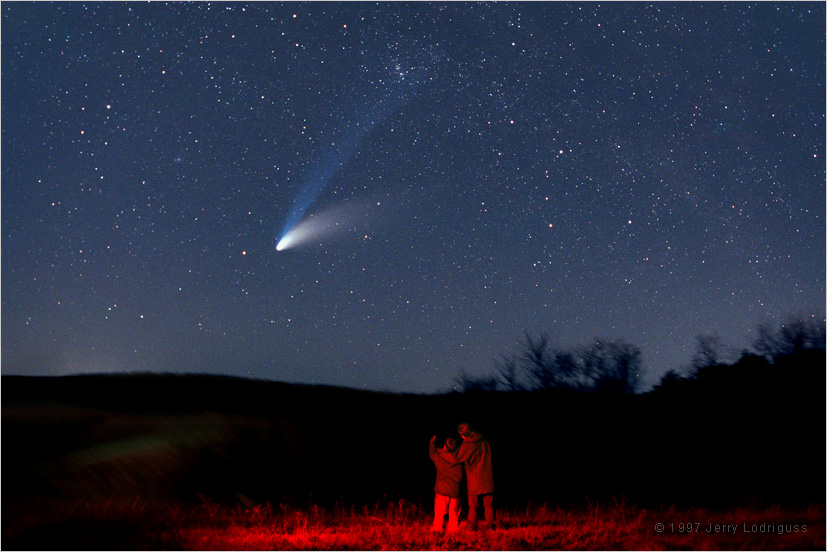
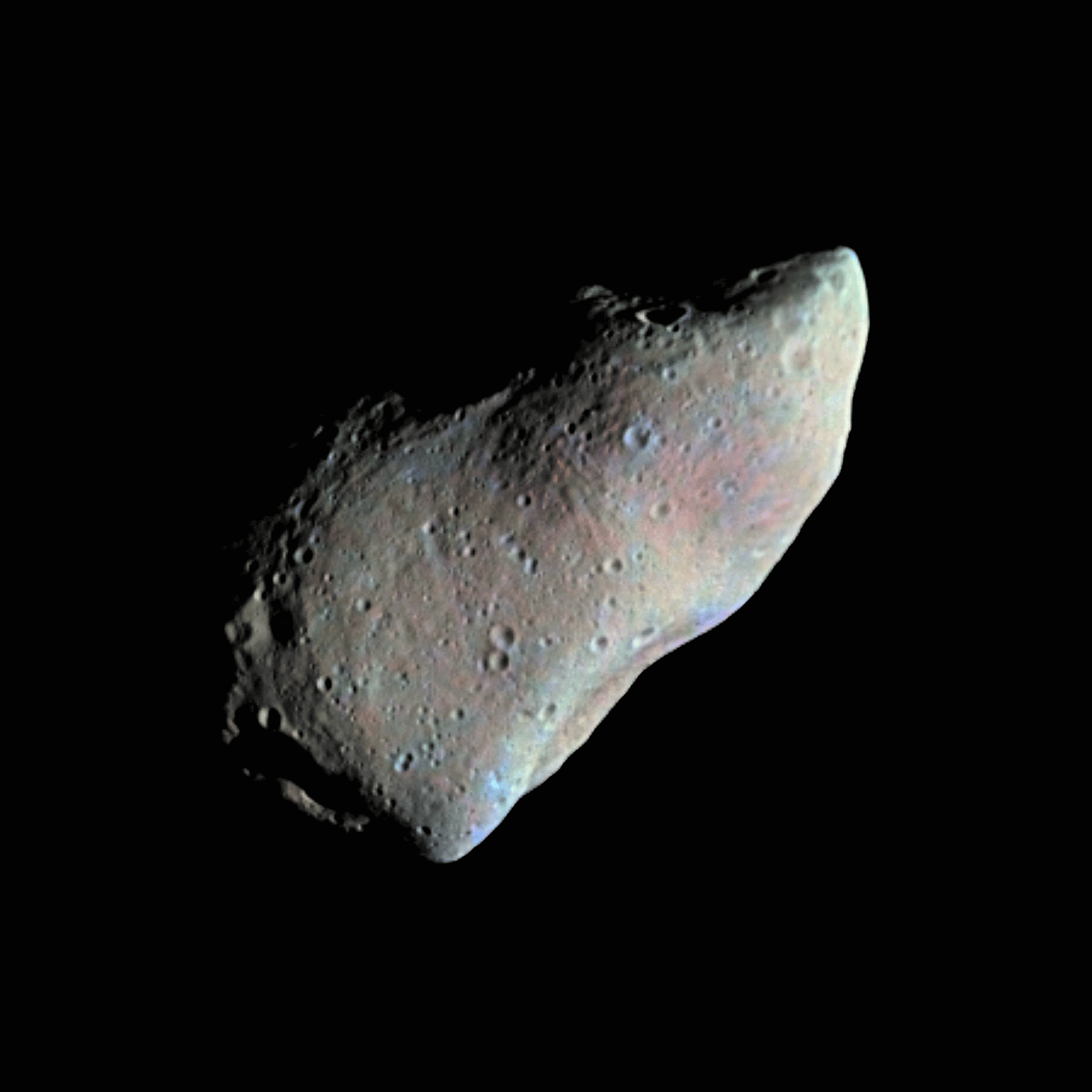
so what has happened to cause the geminids? the theory is a bit controversial, but many believe that 3200 Phaeton is the central rocky remains of what was once a comet! the orbit of 3200 phaeton is elliptical and passes very close to the sun, which are characteristics of comets, not asteroids. you can read more from NASA, but in the meantime... enjoy!!
(the first photo of the geminids was taken by Fred Bruenjes in 2004.)
Saturday, December 8, 2007
indexed does washington


the arrow of time
why does time flow in one direction and not the other? why do we remember the past and not the future? how did our early universe have so many particles packed so tightly together in such a small volume? what initiated the burst of inflation very early in the existence of our universe? why/how was entropy lower in the early universe than it is now?
sean carroll at cosmic variance attempts to explain his understanding of the universe in terms we can all begin to discuss. he examines the arrow of time and other interesting topics in a way that makes your brain twist trying to understand how they all fit together! enjoy!
sean carroll at cosmic variance attempts to explain his understanding of the universe in terms we can all begin to discuss. he examines the arrow of time and other interesting topics in a way that makes your brain twist trying to understand how they all fit together! enjoy!
Friday, December 7, 2007

intersection of philip glass and sesame street
the music sounds similar to the collaborative work between philip glass and ravi shankar, called passages.
biggest mars for next 8 years!
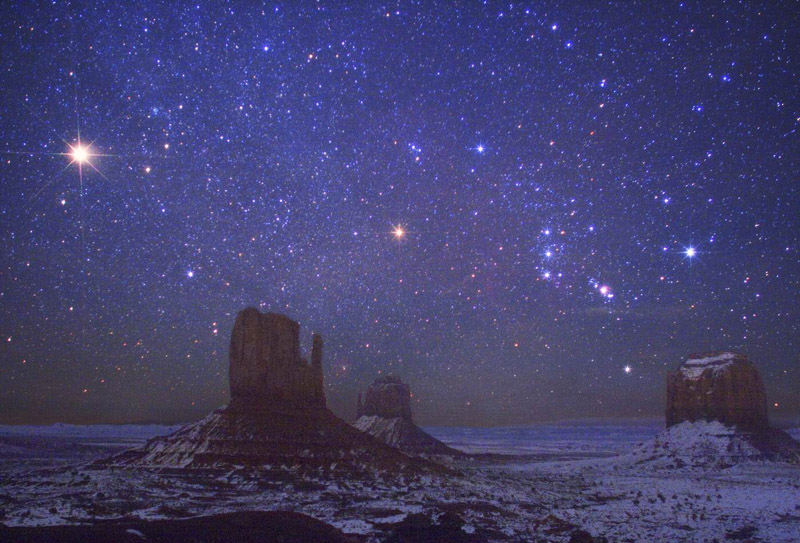
as this is my last weekend to host the public star parties at the old telescope on UT's campus, i'm thrilled that mars is putting on such a show! mars doesnt look terribly exciting thru average telescopes most of the time it is visible in our sky, because it's far away from us in its orbit, it doesnt have big bright moons and it has no rings. but this month, on december 18th, mars appears bigger to us than it will be for the next 8 years!
being close means that mars appears brighter in our night sky, making it easier to find, and hopefully obvious to see for the next month once you get yourself acquainted! mars rises early in the evening in the east and then moves overhead and across the entire sky as the night goes by. to find it, face east in the evening and try to find the familiar constellation, orion, with three bright stars lined up almost vertically. move your eyes to the left and you'll notice two bright stars also aligned vertically, castor and pollux, of gemini. in between orion and the pair, castor and pollux, you'll see a bright orange point of light... closer to castor and pollux... thats mars!!

mars is not only brighter due to its closeness, it also appears bigger. our eyes cannot detect the size difference as easily as we notice its enhanced brightness level.... but looking thru a telescope will be more exciting because mars is almost 16 arcseconds across!
if you have a telescope, use it. if you don't, the look for astronomical societies in your town or see if the local university has public viewing nights or star parties!
once you are looking thru the eyepiece of a telescope at the image of the red planet, try to locate the white clouds covering the north polar ice caps. depending on the type of telescope, the "north pole" could be at the top or the bottom of your image. the image below shows mars as seen by Jean-Luc Dauvergne and Francois Colas a couple weeks ago in france.
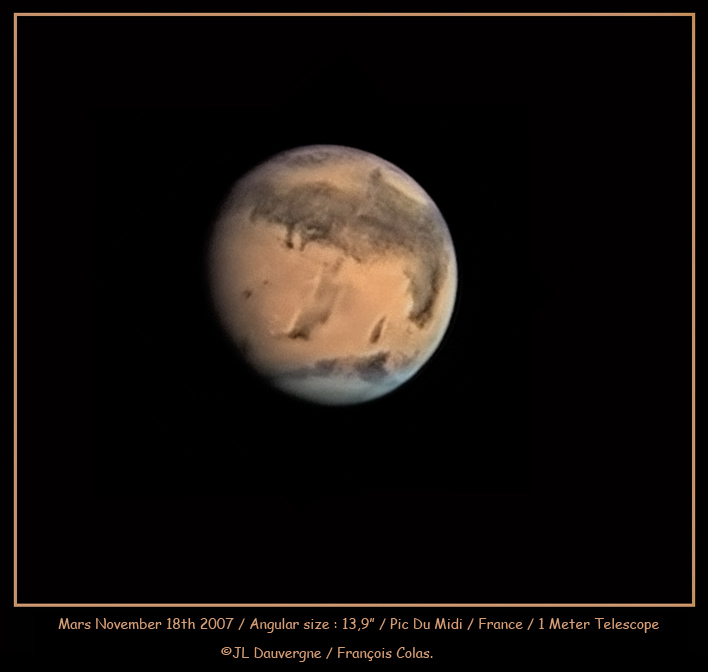
a martian day is 40 minutes longer than a day on earth, so each week that you look at mars you'll see slightly different dark spots ("maria"), bright spots ("terrae") and cloud cover. sky and telescope has a nice mars finder application that shows the features of mars visible to us at any time! enjoy!
being close means that mars appears brighter in our night sky, making it easier to find, and hopefully obvious to see for the next month once you get yourself acquainted! mars rises early in the evening in the east and then moves overhead and across the entire sky as the night goes by. to find it, face east in the evening and try to find the familiar constellation, orion, with three bright stars lined up almost vertically. move your eyes to the left and you'll notice two bright stars also aligned vertically, castor and pollux, of gemini. in between orion and the pair, castor and pollux, you'll see a bright orange point of light... closer to castor and pollux... thats mars!!
mars is not only brighter due to its closeness, it also appears bigger. our eyes cannot detect the size difference as easily as we notice its enhanced brightness level.... but looking thru a telescope will be more exciting because mars is almost 16 arcseconds across!
if you have a telescope, use it. if you don't, the look for astronomical societies in your town or see if the local university has public viewing nights or star parties!
once you are looking thru the eyepiece of a telescope at the image of the red planet, try to locate the white clouds covering the north polar ice caps. depending on the type of telescope, the "north pole" could be at the top or the bottom of your image. the image below shows mars as seen by Jean-Luc Dauvergne and Francois Colas a couple weeks ago in france.
a martian day is 40 minutes longer than a day on earth, so each week that you look at mars you'll see slightly different dark spots ("maria"), bright spots ("terrae") and cloud cover. sky and telescope has a nice mars finder application that shows the features of mars visible to us at any time! enjoy!
carnival of space #32
read many interesting articles about our solar system and space at large at the 32nd installement of the carnival of space hosted by the robot guy.
and a little comic holiday cheer...


and a little comic holiday cheer...


Thursday, December 6, 2007
hotel mauna kea
here's a clever and hilarious little video created by astronomers who regularly visit mauna kea, hawaii to use NASA's infrared telescope facility (IRTF). they created this parody of the song "hotel california" ... most likely while they were stuck killing time during a night of bad weather. they successfully capture the joy and frustrations of observing anywhere!
observing can be incredibly fun, but it's also challenging when your brain cant concentrate or think properly due to the lack of oxygen at high altitude. when things go wrong, computers break down or your data looks funky, it can get a little chaotic trying to figure out what the problem is! an additional challenge is that absolutely nothing is "standard" about operating any telescope anywhere! they are all unique beasts that get tweaked and adjusted over time so that they work! when you use one many times you get used to its methods and particular quirks, but of course these things change over time.
remember that this all assumes the weather is good enough to open the dome and observe the sky! when the roads are so bad, you cant even drive to the 14,000ft summit of mauna kea, you relax at hale pohaku where the dorm rooms are, at 9000ft. in the video they show some footage of an available time killer... the dart board! there's also a ping pong table and a good-as-can-be-expected pool table! they also highlight some other familiar scenes that many astronomers visit during their brief time off the mountain!
most observatories have a collection of games or things to entertain astronomers during bouts of bad weather.... there is the option to work uninterrupted thru the night, which sometimes is very nice... but i find that my brain shuts off after 2 am and i can no longer concentrate. so i get to know the astronomers using the other telescopes, drink a beer, play cards, read a book... it can be dangerous to try to solve an old puzzle sitting around because inevitably pieces have been lost over the years! observing is much more fun when the skies are clear!
observing can be incredibly fun, but it's also challenging when your brain cant concentrate or think properly due to the lack of oxygen at high altitude. when things go wrong, computers break down or your data looks funky, it can get a little chaotic trying to figure out what the problem is! an additional challenge is that absolutely nothing is "standard" about operating any telescope anywhere! they are all unique beasts that get tweaked and adjusted over time so that they work! when you use one many times you get used to its methods and particular quirks, but of course these things change over time.
remember that this all assumes the weather is good enough to open the dome and observe the sky! when the roads are so bad, you cant even drive to the 14,000ft summit of mauna kea, you relax at hale pohaku where the dorm rooms are, at 9000ft. in the video they show some footage of an available time killer... the dart board! there's also a ping pong table and a good-as-can-be-expected pool table! they also highlight some other familiar scenes that many astronomers visit during their brief time off the mountain!
most observatories have a collection of games or things to entertain astronomers during bouts of bad weather.... there is the option to work uninterrupted thru the night, which sometimes is very nice... but i find that my brain shuts off after 2 am and i can no longer concentrate. so i get to know the astronomers using the other telescopes, drink a beer, play cards, read a book... it can be dangerous to try to solve an old puzzle sitting around because inevitably pieces have been lost over the years! observing is much more fun when the skies are clear!
Wednesday, December 5, 2007
results are coming in...
as job application deadlines continue to come and go, i sit patiently waiting for responses while finishing papers and writing my dissertation.
yesterday i received my first job offer. yippee!
this morning i received my first rejection letter. dud.
i'm still sending out applications, but i think i found a great job for which i'm definitely qualified ;) .... or not.
yesterday i received my first job offer. yippee!
this morning i received my first rejection letter. dud.
i'm still sending out applications, but i think i found a great job for which i'm definitely qualified ;) .... or not.
Tuesday, December 4, 2007
new horizons on jupiter and io
NASA recently shared with us this beautiful image taken by the pluto-bound new horizons spacecraft. the spacecraft flew by jupiter on Feb. 28, 2007, in order to use the large gas giant's gravitational field as a cosmic slingshot to the outskirts of our solar system. taking advantage of the closeness, folks at NASA spent time taking several images of of jupiter and its moons with the cameras on-board new horizons. below is a composite image of jupiter and the active moon, io.

the image feels so calm, and quiet, yet jupiters surface is completely covered in raging storms! the larger sphere of jupiter shows the complex layering of the clouds that cover the planets surface in horizontal bands. the big blue circle shows the biggest single storm on jupiters surface, more commonly known as the "great red spot." the worst hurricanes on earth last a couple weeks as they travel across the surface.... imagine that jupiters great storm has lasted hundreds of years!! different filters collect light of different wavelengths, which are shaded different colors in the picture in order to distinguish the physical representations on the surface of the planets. in this image, the red represents the deeper clouds, while the blue shows the upper layers.
the smaller orb in the image is jupiter's moon, io. io orbits closer to jupiter than our moon is to us and as a result, its the most volcanically active object in the entire solar system. the image of io was taken on March 1st 2007 and was created to represent the "true colors" of the moon as we would see them with our eyes. at the top of the moon, where the dark night persists, you can see the sun illuminating the blue tip a huge plume of smoke curving up from the 200-mile-high eruption rising above the volcano Tvashtar!! the red dot just below shows the flowing lava glowing in the darkness! new horizons detected at least 36 actively flowing volcanoes on io, glowing in the infrared.
the image feels so calm, and quiet, yet jupiters surface is completely covered in raging storms! the larger sphere of jupiter shows the complex layering of the clouds that cover the planets surface in horizontal bands. the big blue circle shows the biggest single storm on jupiters surface, more commonly known as the "great red spot." the worst hurricanes on earth last a couple weeks as they travel across the surface.... imagine that jupiters great storm has lasted hundreds of years!! different filters collect light of different wavelengths, which are shaded different colors in the picture in order to distinguish the physical representations on the surface of the planets. in this image, the red represents the deeper clouds, while the blue shows the upper layers.
the smaller orb in the image is jupiter's moon, io. io orbits closer to jupiter than our moon is to us and as a result, its the most volcanically active object in the entire solar system. the image of io was taken on March 1st 2007 and was created to represent the "true colors" of the moon as we would see them with our eyes. at the top of the moon, where the dark night persists, you can see the sun illuminating the blue tip a huge plume of smoke curving up from the 200-mile-high eruption rising above the volcano Tvashtar!! the red dot just below shows the flowing lava glowing in the darkness! new horizons detected at least 36 actively flowing volcanoes on io, glowing in the infrared.
DIY eggstractor
heres a clever mechanism to cleanly extract a hard boiled egg from it's shell! very nice.
DIY: Eggstractor - video powered by Metacafe
based on this hands-on demonstration...
Peeling Eggs - video powered by Metacafe
link
DIY: Eggstractor - video powered by Metacafe
based on this hands-on demonstration...
Peeling Eggs - video powered by Metacafe
link
ugly christmas sweater contest winner
happy holidays, from the girl with the biggest... amount of courage... bliss. amazingly creative and hilarious!

it took me a while to notice her cute santa hat! hahaha!
it took me a while to notice her cute santa hat! hahaha!
Saturday, December 1, 2007
new couch? naw...
inspired by his own comic....

... Randall Munroe of xkcd created his own ball pit!
"I was thinking of getting a couch or something for my room, somewhere for guests to lounge around. Fuck new couches. I now have a ball pit in my room."
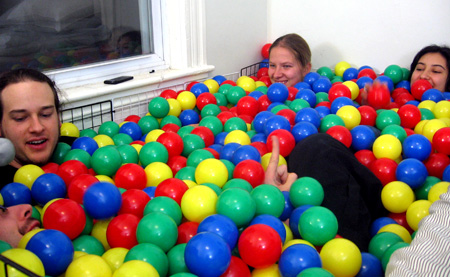
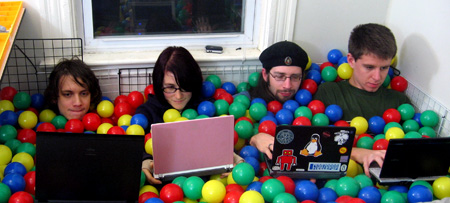
pure awesome fun!
read about the details and the best way to create your own ball pit playground: here.
... Randall Munroe of xkcd created his own ball pit!
"I was thinking of getting a couch or something for my room, somewhere for guests to lounge around. Fuck new couches. I now have a ball pit in my room."
pure awesome fun!
read about the details and the best way to create your own ball pit playground: here.
shrinking again, comet holmes
comet holmes is no longer the biggest thing in our solar system. the diffuse halo has shrunk back down and now spans half a degree in the sky, or about the same size as the full moon. take advantage of the currently moonless early evening sky to try to spot comet holmes.

the use of binoculars will greatly aid your ability to see comet holmes. here's an old finding chart in order for you to see the whole sky view, followed by a detailed views of how the comet is moving around the sky inside the constellation, perseus, for the next several months.


gary kronk shares the history of comet holmes, here, including some great photos of the burst stages since the initial outburst in late october.
the use of binoculars will greatly aid your ability to see comet holmes. here's an old finding chart in order for you to see the whole sky view, followed by a detailed views of how the comet is moving around the sky inside the constellation, perseus, for the next several months.
gary kronk shares the history of comet holmes, here, including some great photos of the burst stages since the initial outburst in late october.
Subscribe to:
Posts (Atom)